

How to Style Black Aluminium Internal Glass Doors: Design Guide
Black aluminium internal glass doors now account for roughly 30% of our UK export orders - and the specification has shifted from simple clear-glazed panels to architecturally detailed systems. After supplying them to developments from Manchester loft conversions to London new-builds, here's what actually works in situ, and what looks good on Pinterest but fails in a real hallway.
This guide covers colour strategy, flooring transitions, and lighting placement for interiors with black-framed glass doors. If you're specifying for a client project, skip to the specification section for frame profiles, glass options, and ironmongery details.
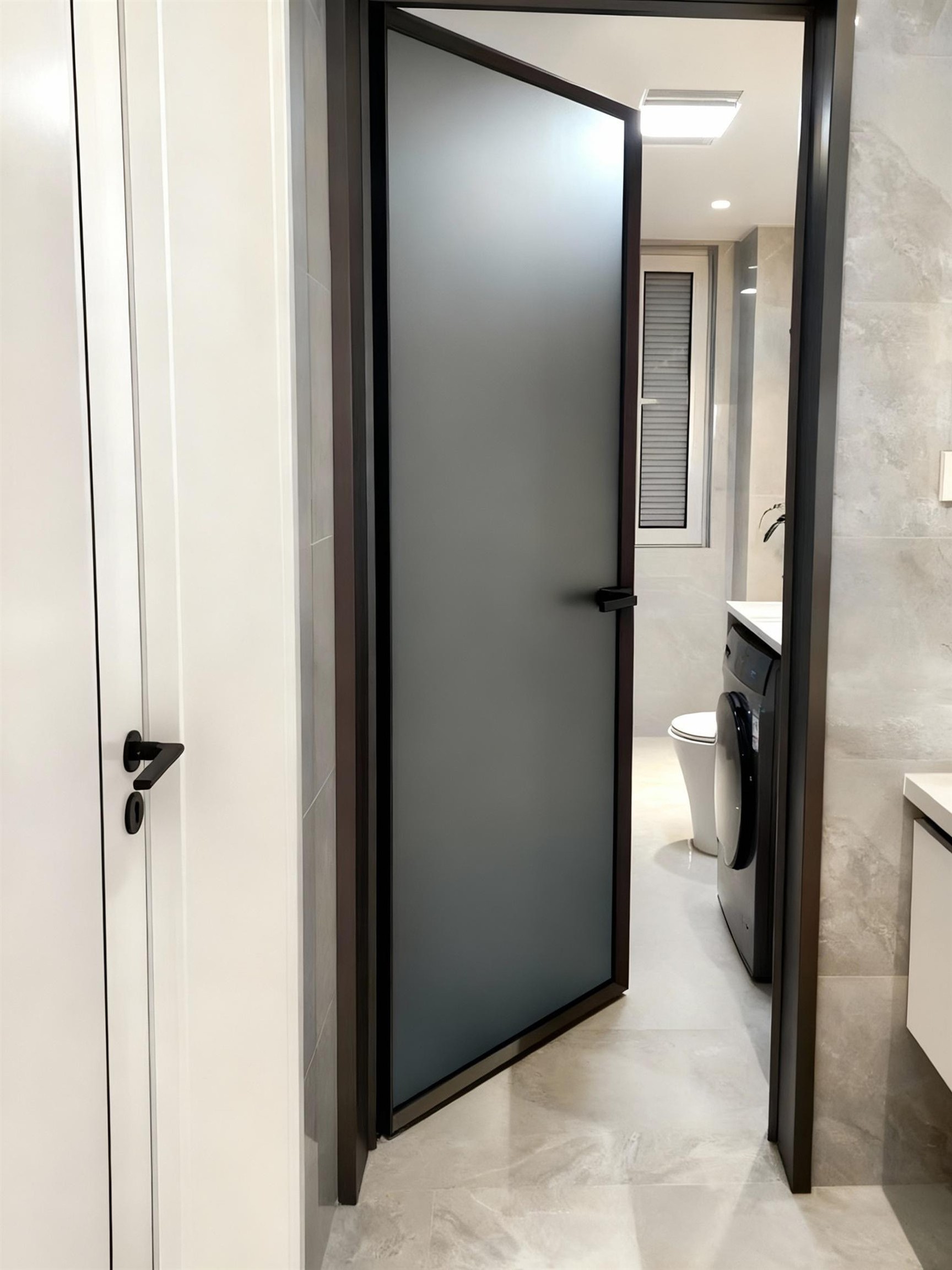
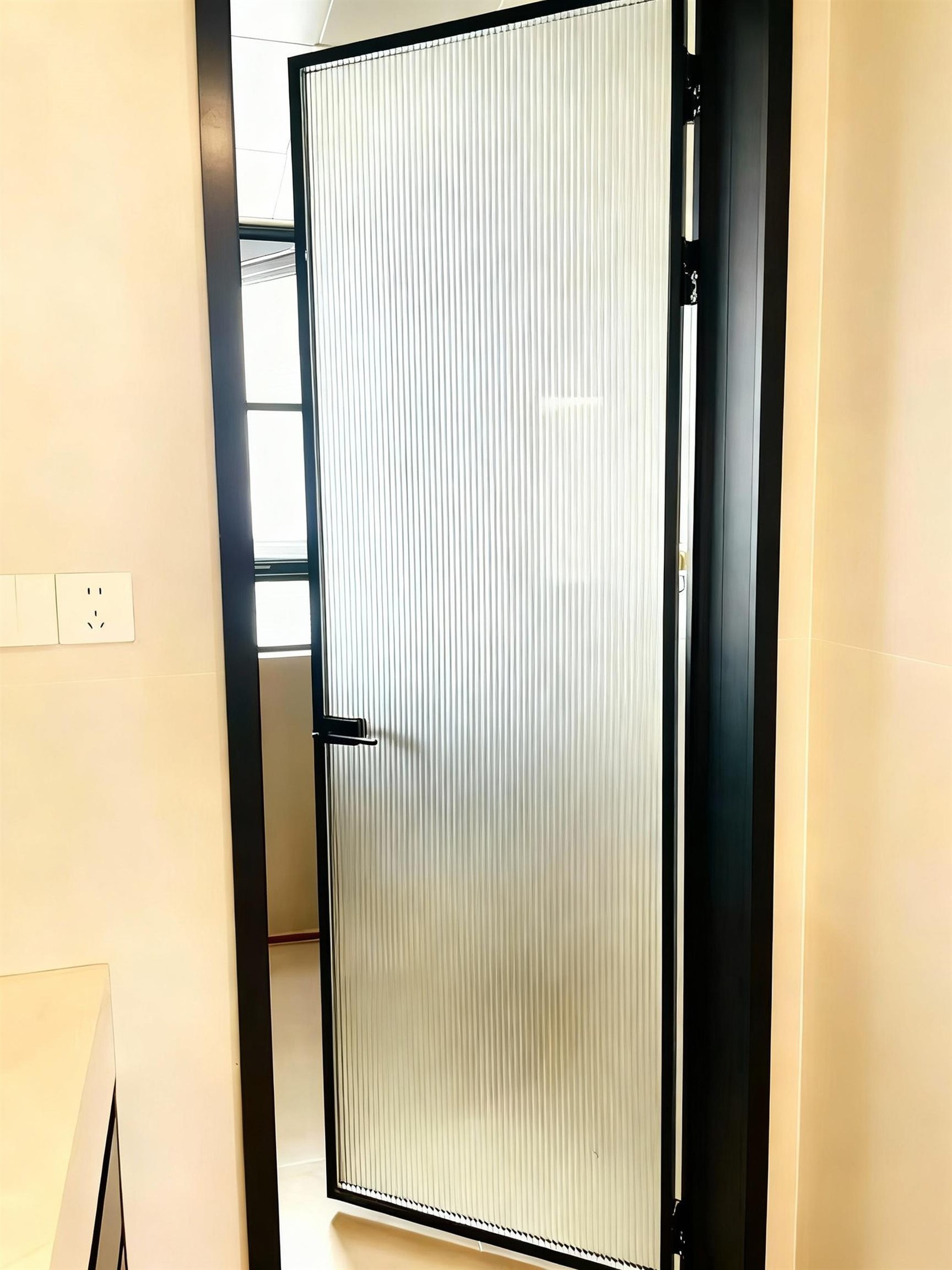
Why Black Aluminium Glass Doors Work in Modern Interiors
Slim Sightlines & Light Transmission
A standard black aluminium internal door frame runs 40–50mm in sightline width - roughly half the visual mass of a timber frame at 80–90mm. That slim profile means the door reads as a graphic line rather than a solid barrier, preserving sightlines between rooms while maintaining acoustic and thermal separation.
In open-plan layouts, this is particularly effective. A black-framed glass door between kitchen and living areas allows natural light to penetrate deep into the plan without the space feeling cavernous. The frame colour anchors the opening visually; without it, a clear glass panel can appear almost invisible, creating a safety hazard and a vague spatial boundary.
Industrial-to-Contemporary Versatility
The black aluminium frame carries strong industrial DNA - it references Crittall steel windows and warehouse glazing - but powder-coated aluminium is lighter, more corrosion-resistant, and significantly more cost-effective at scale than steel. That combination allows the same door to work in a Shoreditch warehouse conversion or a suburban new-build without stylistic strain.
For contractors, this versatility reduces SKU complexity. A single black aluminium internal door specification can run across an entire mixed-use development, from residential units to commercial lobbies, with only glass and hardware changes to differentiate public from private zones.
Colour Schemes That Complement Black Frames
Monochromatic & Tonal Palettes
Black frames on clear glass already create a high-contrast monochrome statement. The most successful schemes we see on site extend that tonal range rather than fighting it: off-white walls (Farrow & Ball "Strong White" or similar), pale grey porcelain flooring, and charcoal soft furnishings. The result is a calm, gallery-like backdrop where the door frames provide the only sharp geometry.
Avoid pure brilliant white adjacent to black powder coat. The contrast is too stark for residential spaces, and it makes the black read as harsh rather than refined. A 5–10% tint in the wall colour softens the transition.
Warm Neutrals & Earth Tones
For residential clients who find monochrome cold, warm neutrals work surprisingly well with black aluminium. Taupe walls, natural oak flooring, and linen upholstery create a Scandinavian warmth that the black frames punctuate without dominating. The key is consistency: if the flooring is warm-toned, keep the walls in the same temperature family. A grey-beige wall against warm oak creates a muddy transition.
Bold Accents & Contrasts
In commercial fit-outs - co-working spaces, design studios, hospitality - we've seen black aluminium doors paired with saturated colours to strong effect. A deep teal or burnt orange feature wall behind a black-framed door creates a focal point that draws the eye through the opening. The black frame acts as a visual full stop, preventing the colour from bleeding into adjacent spaces.
The risk here is overuse. One accent wall works; three create a funfair atmosphere. Specify the accent for the room the door opens into, not the room it closes off.
Flooring, Lighting & Spatial Layout
Flooring Materials & Transitions
The threshold detail matters more than the flooring material itself. Black aluminium internal doors typically sit on a low-profile threshold of 10–15mm. If the flooring levels differ between rooms - common in retrofits where one room has original floorboards and another has been relaid - that threshold becomes a trip hazard and a visual interruption.
Best practice: set the finished floor level (FFL) equal on both sides of the opening, or use a ramped transition strip in a matching black anodized finish. For timber floors, a black aluminium cover strip recessed flush with the floorboards is cleaner than a surface-mounted bar.
Maximising Natural Light
Position black-framed glass doors where they catch raking light from side windows. The frame then reads as a shadow line rather than a dark void. In north-facing rooms, this is critical: a black frame perpendicular to the light source can appear as a solid black rectangle, defeating the purpose of the glass.
For east-west orientations, morning light through a bedroom-to-ensuite door creates a visible glow through the glass - an effect clients consistently cite as a selling point in show homes.
Artificial Lighting Strategies
Ceiling downlights directly above a black-framed door create glare on the glass and hot spots on the frame. Better approaches:
Wall sconces at 1.6–1.8m height, positioned 300–500mm from the frame, graze light across the surface and emphasise the profile.
Recessed floor washes in the reveal above the door head cast light down through the glass, making the panel glow.
LED strip in the head track - available on some aluminium glass door systems - provides integrated illumination without visible fittings.
Specification Tips for Designers & Contractors
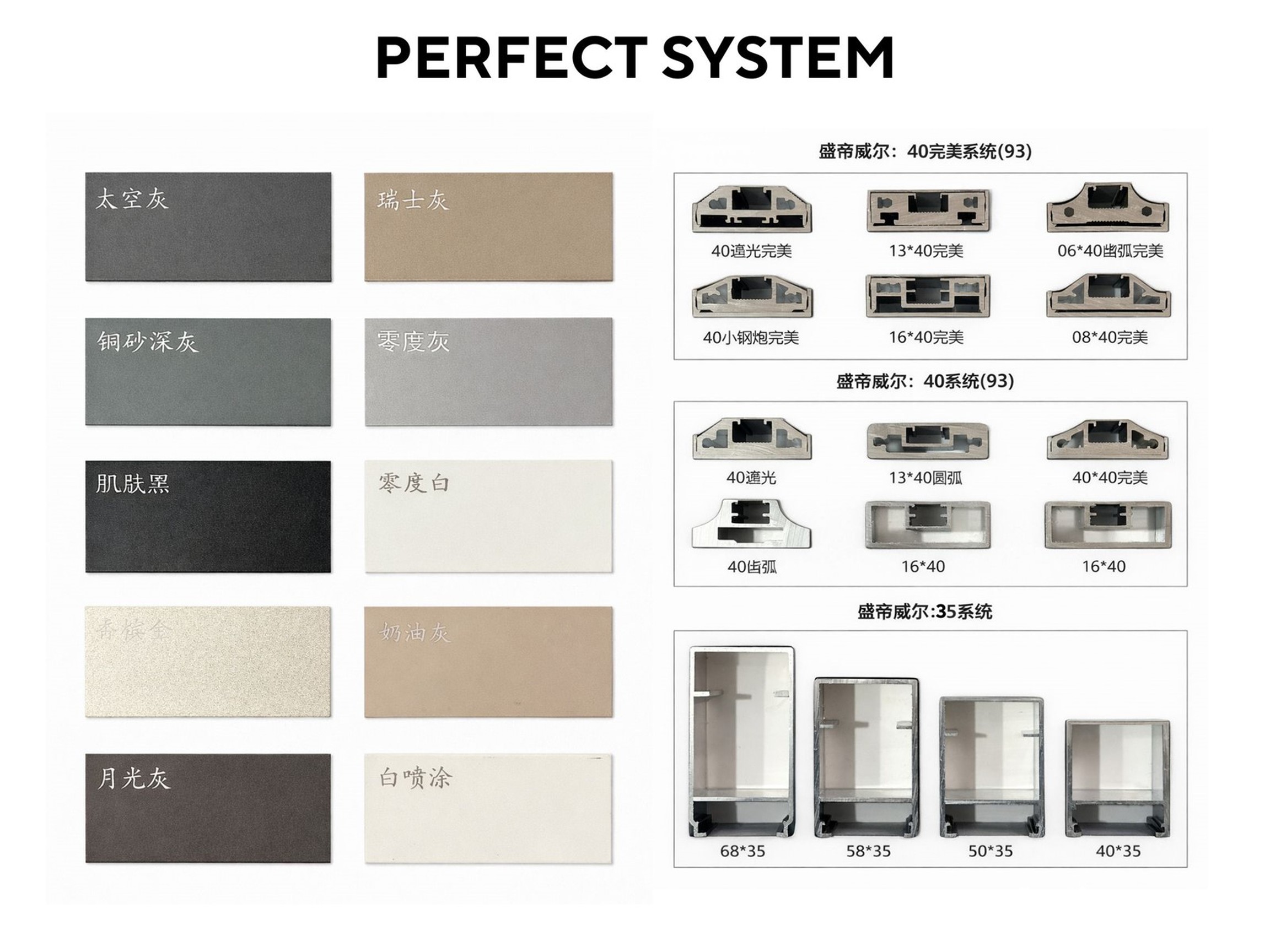
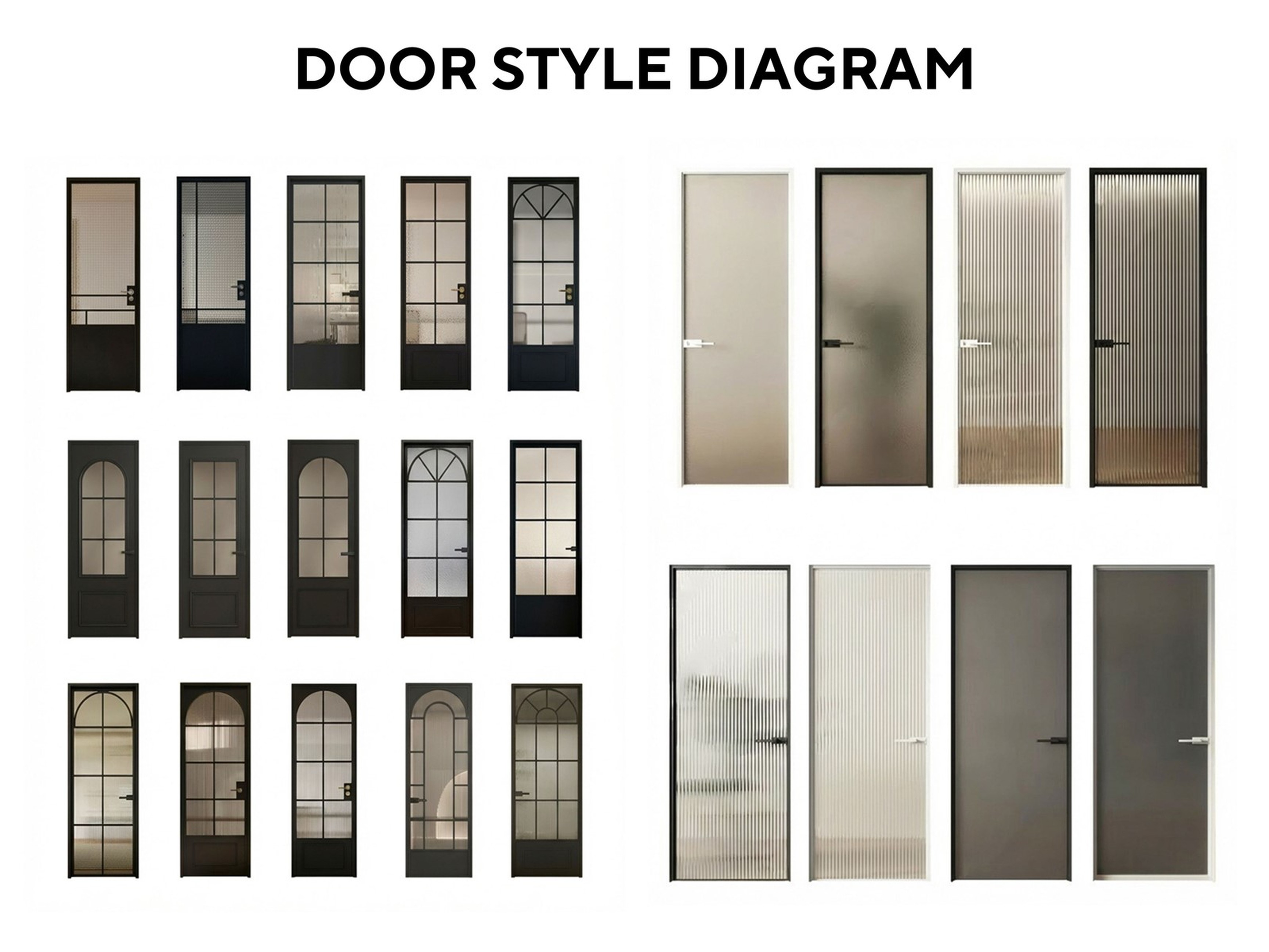
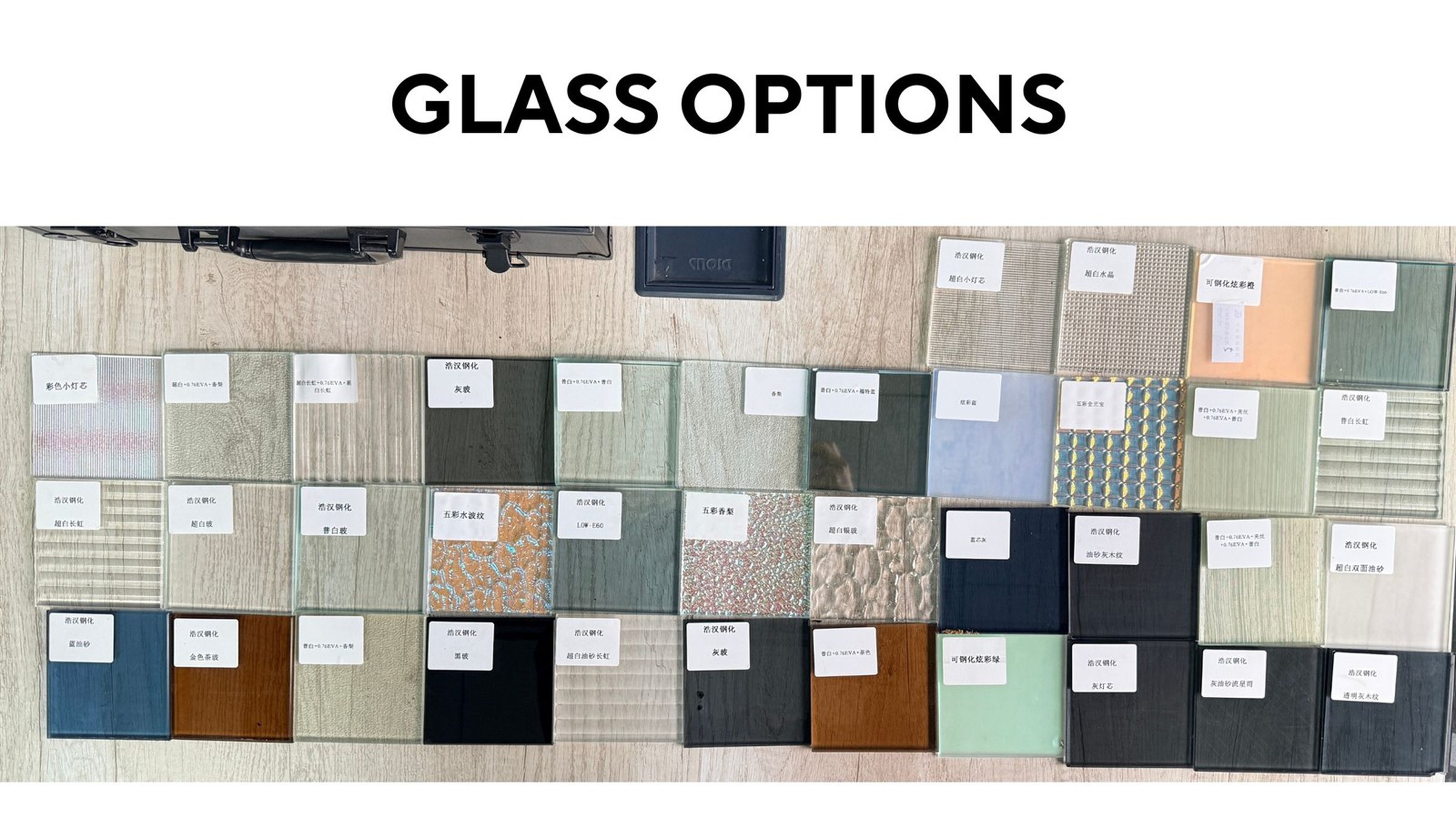
Frame Profiles & Finishes
| Profile Type | Sightline Width | Best For | Finish Options |
|---|---|---|---|
| Slimline | 30–35mm | Contemporary, crittall-style | Black powder coat (RAL 9005), black anodized |
| Standard | 40–50mm | General residential/commercial | RAL 9005, RAL 7016, dual-colour |
| Heritage | 50–65mm | Period properties, industrial | RAL 9005 with mock-putty bar detailing |
All profiles should be 6063-T5 aluminium with a minimum 40-micron polyester powder coat or AA20 anodized finish. Internal doors don't carry the weathering load of external units, but the powder coat still needs to resist scuffing from daily contact and cleaning chemicals.
Glass Options
| Glass Type | Thickness | Privacy Level | Best Application |
|---|---|---|---|
| Clear toughened | 8mm or 10mm | None | Open-plan separation, show homes |
| Satin / acid-etched | 8mm | Medium | Bedrooms, bathrooms, WCs |
| Frosted laminated | 8.38mm | High | Private offices, consultation rooms |
| Tinted grey / bronze | 8mm | Low (colour) | Commercial, south-facing rooms |
| Reeded / fluted | 8mm | Medium | Art Deco references, hospitality |
For acoustic separation between rooms, specify laminated glass (8.38mm or 10.38mm) rather than monolithic toughened. The interlayer adds approximately 3–4dB Rw improvement - noticeable in practice between a music room and a study, for example.
Hardware & Ironmongery
Handle choice dramatically affects how the door reads. A long bar handle (300–400mm) in matte black or brushed steel emphasises the verticality of the frame. A small lever on a backplate reads as domestic and can undercut the architectural intent.
For commercial applications, specify bathroom indicator locks with emergency release and hold-open magnetic catches for fire-compartment doors. Internal aluminium doors are not fire-rated by default - if FD30 or FD60 is required, a separate fire-rated steel or timber door must be specified, or the opening must be protected by a fire curtain.
Room-by-Room Application Ideas
Loft conversions: A black-framed glass door at the top of a staircase maintains the visual flow from the landing into the new bedroom while containing heat. Specify satin glass for privacy; the diffusion softens the light without blocking it.
Kitchen-diner separation: Clear glass with a slimline profile keeps the cook connected to guests while containing cooking odours. A brushed steel bar handle complements most kitchen hardware ranges.
Home office: Frosted glass maintains privacy for video calls without creating a claustrophobic box room. The black frame provides a professional backdrop visible on camera.
Commercial lobby to office: Double-leaf black aluminium doors with clear glass and floor springs create an impressive entrance while maintaining acoustic separation. Specify automatic closers with backcheck to prevent slamming.
Frequently Asked Questions
Q: Do Black Aluminium Internal Doors Suit Period Properties?
A: Yes, with profile selection. A heritage-profile frame at 55–65mm sightline with mock glazing bars reads as Crittall steel - a detail common in 1920s–1930s properties. Avoid slimline 30mm profiles in period settings; they look anachronistic.
Q: How Do You Clean Black Powder-Coated Aluminium Frames?
A: Warm water with a mild detergent and a soft microfibre cloth. Avoid abrasive cleaners or solvents - they can damage the powder coat surface. The black finish shows dust less than white or grey, which is one reason it's popular in commercial spaces.
Q: Can Black Aluminium Internal Doors Be Double-Leaf?
A: Yes. Double-leaf configurations up to 2400mm wide are standard. For wider openings, consider a fixed sidelight panel with a single active leaf - this reduces hardware cost and improves weather sealing (if the opening connects to an unheated space).
Q: What Head Height Is Needed For A Black Aluminium Internal Door?
A: Standard door height is 2040mm. For architectural impact, specify 2400mm or 2700mm - the slim black profile handles the extra height without visual heaviness. Ensure the structural opening can support the head track; tall doors are heavier and require a steel lintel or reinforced timber header.
Q: Are Black Aluminium Doors More Expensive Than White Or Grey?
A: No - RAL 9005 (pure black) is a standard stock colour with no premium. Custom blacks (soft black, jet black) or dual-colour finishes (black exterior, white interior) may carry a 10–15% surcharge depending on batch size.
Specifying SGL Black Aluminium Internal Doors
We manufacture black aluminium internal glass doors at our 9,000 m² facility in Shaanxi, with in-house powder coating, CNC machining, and glass processing. For UK and European projects, we offer:
- Bespoke dimensions - any width up to 1500mm single leaf, 2400mm double leaf
- Standard RAL colours - RAL 9005, 7016, 9016, plus 30+ optional colours
- Glass processing - clear, satin, frosted, tinted, laminated, reeded
- Hardware supply - handles, locks, hinges, floor springs, magnetic catches
- Certification support - CE marking, UKCA where applicable
- Container or LCL shipping - flexible for single developments or multi-site rollouts
For technical drawings, finish samples, or a project quotation, contact our export team with your schedule of openings.
References
- RIBA - Royal Institute of British Architects. https://www.architecture.com/
- BSI - British Standards Institution. https://www.bsigroup.com/
Published by SGL Doors & Windows Design Team. For specifications, samples, or technical support, contact our UK export department.


