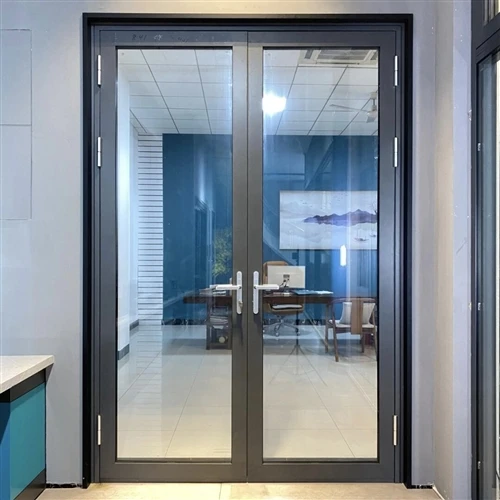
In the realm of architectural design and home improvement, the choice of doors plays a pivotal role in not only enhancing the aesthetic appeal of a space but also in determining its functionality. French glass doors have long been celebrated for their elegance and ability to flood interiors with natural light. However, one aspect that often goes overlooked is their noise reduction ability. As a supplier of French Glass Doors, I am excited to delve into this topic and shed light on the science behind their sound - dampening capabilities.
How Sound Travels and the Role of Glass
To understand the noise reduction ability of French glass doors, we first need to grasp the basics of how sound travels. Sound is a mechanical wave that propagates through a medium, such as air, by causing particles in the medium to vibrate. When sound waves encounter a barrier, like a glass door, several things can happen: reflection, absorption, or transmission.
Glass, in general, has certain properties that affect how it interacts with sound waves. The thickness and type of glass are two crucial factors. Thicker glass tends to have better sound - blocking capabilities because it provides more mass for the sound waves to overcome. For French glass doors, a common type of glass used is double - glazed or insulated glass. Double - glazed glass consists of two panes of glass separated by a layer of air or an inert gas, such as argon. This design significantly improves the door's ability to reduce noise.
The air or gas layer between the two glass panes acts as a buffer. Sound waves have to travel through the first pane of glass, then through the insulating layer, and finally through the second pane. Each transition from one medium to another causes a portion of the sound energy to be reflected or absorbed, reducing the amount of sound that is transmitted through the door.


Factors Affecting Noise Reduction in French Glass Doors
- Glass Thickness and Quality: As mentioned earlier, thicker glass offers better noise insulation. High - quality glass, which is manufactured with fewer imperfections, also performs better. For instance, tempered glass, which is heat - treated to increase its strength, can provide enhanced noise reduction compared to standard annealed glass.
- Sealing and Framing: A well - sealed door is essential for effective noise reduction. The frames of French glass doors should be made of materials that have good sound - insulating properties, such as uPVC (unplasticized polyvinyl chloride). uPVC frames are not only durable but also have inherent insulating qualities. Additionally, the seals around the edges of the door, including the weatherstripping and gaskets, play a crucial role. A tight seal prevents sound from leaking through the gaps between the door and the frame.
- Design and Construction: The design of the French glass door can also impact its noise reduction ability. Doors with multiple panels or a more complex structure may offer better sound insulation as they provide more barriers for the sound waves to pass through. For example, a French glass door with three panels may reduce noise more effectively than a single - panel door.
Comparing French Glass Doors with Other Types of Doors
Let's compare French glass doors with some other popular door types in terms of noise reduction.
Single Glass UPVC Door: A Single Glass UPVC Door typically has only one pane of glass. While uPVC frames do offer some level of insulation, the lack of a second pane of glass and an insulating layer means that it is generally less effective at reducing noise compared to French glass doors with double - glazed glass. The single pane of glass allows more sound waves to pass through, resulting in a noisier interior environment.
Frosted Glass Doors: Frosted Glass Doors are often chosen for their privacy features. The frosted finish on the glass does not significantly affect its noise - reduction properties. Similar to single - glass doors, if they are not double - glazed, they may not provide the same level of noise insulation as French glass doors with double - glazed units.
Measuring Noise Reduction
The noise reduction ability of doors is typically measured in decibels (dB). The higher the decibel rating, the better the door is at reducing noise. A well - designed French glass door with double - glazed glass can achieve a noise reduction of up to 30 - 40 dB. This means that it can significantly reduce the amount of external noise, such as traffic noise, street chatter, or the sound of neighbors, making the interior of a home or building a much quieter and more peaceful place.
Real - World Applications
French glass doors are suitable for a variety of real - world applications where noise reduction is important. In residential settings, they can be used as patio doors to separate the living area from the outside environment. This is particularly beneficial in urban areas where there is a lot of traffic noise. In commercial settings, French glass doors can be used in offices, restaurants, or hotels to create a more peaceful and private atmosphere.
The Aesthetic and Functional Balance
One of the great advantages of French glass doors is that they offer a perfect balance between aesthetics and functionality. While they are excellent at reducing noise, they also add a touch of elegance and sophistication to any space. The large glass panels allow natural light to flood the interior, creating a bright and airy atmosphere. This combination of beauty and practicality makes French glass doors a popular choice among homeowners and designers alike.
Conclusion
In conclusion, French glass doors have impressive noise reduction abilities, thanks to their double - glazed glass, high - quality seals, and well - designed frames. Their ability to reduce noise makes them a valuable addition to any home or commercial building, providing a quieter and more comfortable environment.
If you are interested in enhancing the noise reduction in your space while adding a touch of elegance, our French Glass Doors are an excellent choice. We invite you to contact us for more information and to discuss your specific requirements. Whether you are a homeowner looking to upgrade your patio doors or a commercial developer in need of high - quality doors for a new project, we are here to assist you.
References
- Beranek, Leo L. "Acoustics." American Institute of Physics, 1954.
- Craik, R. J. M. "The Handbook of Noise and Vibration Control." E & FN Spon, 1996.
- Fahy, Frank J. "Foundations of Engineering Acoustics." Academic Press, 2001.