Aluminum Windows Cost Guide 2026: Prices & Factors Explained
Aluminum window costs are not a mystery - they're a function of extrusion weight, glass specification, hardware grade, and order volume. In 19 years of manufacturing at our Shaanxi facility, we've seen quotes for the same window vary by 300% depending on whether the buyer is comparing FOB factory pricing, landed cost, or fully installed retail.
This guide breaks down what drives aluminum window pricing across casement, sliding, clad, tilt-turn, and double-glazed configurations. Whether you're a contractor pricing a multi-unit development or a homeowner replacing a single bay, you'll understand what you're paying for - and what the low bidder might be omitting.
Note on pricing: The ranges below are retail reference prices for the US market based on publicly available data. For wholesale, FOB, or project-specific pricing, contact our export team with your window schedule.


What Affects Aluminum Window Costs?
Window Size & Dimensions
Size is the single biggest cost driver. A 600×900mm single-glazed casement and a 2400×1800mm sliding unit use fundamentally different amounts of aluminum extrusion and glass.
| Dimension Range | Typical Application | Relative Cost Impact |
|---|---|---|
| 600×900mm – 900×1200mm | Bathroom, utility room | Baseline (1.0×) |
| 1200×1200mm – 1500×1500mm | Bedroom, kitchen | 1.5–2.0× |
| 1800×1500mm – 2400×1800mm | Living room, commercial | 2.5–4.0× |
| Custom / oversized | Architectural projects | 4.0×+ (tooling may apply) |
Larger windows also require thicker glass (6mm vs 4mm) and heavier-duty hardware, compounding the cost increase.
Window Style & Hardware Complexity
Each opening style carries a different hardware burden:
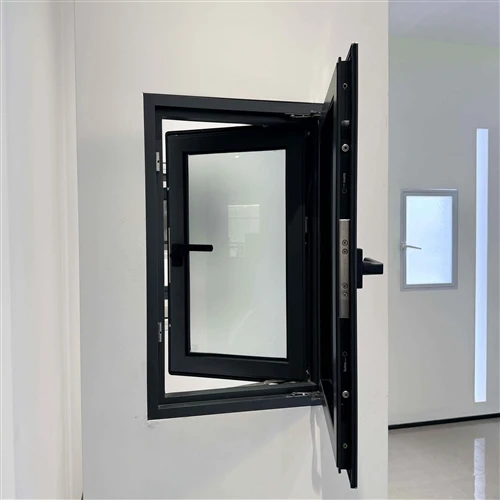
- Casement windows need concealed friction stays rated to 25,000 cycles and multi-point espagnolette locks. Hardware typically accounts for 12–18% of the total frame cost.
- Sliding windows run on stainless steel rollers and single-point locks. Simpler hardware means lower cost, but the track system and interlock gasket add material.
- Tilt and turn windows require dual-action gearing, concealed hinges, and multi-point locking that must operate independently in two modes. Hardware costs 40–60% more than standard casement hardware.
- Aluminum clad windows combine an aluminum exterior shell with a timber interior. The added material and bonding process push costs above all-aluminum equivalents.
Aluminum Grade & Finish
Not all aluminum extrusions are equal. The two grades most commonly used in window manufacturing are 6063-T5 and 6061-T6:
6063-T5: The industry standard for architectural extrusion. Good corrosion resistance, excellent surface finish for anodizing and powder coating. Suitable for most residential and light commercial applications.
6061-T6: Higher tensile strength, used where hardware fixing points need extra rigidity - large sashes, high-rise installations, or heavy triple-glazed units.
Surface treatment also affects cost:
| Finish Type | Thickness / Standard | Relative Cost | Lifespan |
|---|---|---|---|
| Mill finish (untreated) | - | Baseline | 5–10 years (indoor only) |
| Anodizing (AA10) | 10 microns | +15–20% | 15–20 years |
| Anodizing (AA20) | 20 microns | +30–35% | 25–30 years |
| Powder coating (standard) | 40–60 microns | +20–25% | 20–25 years |
| Powder coating (marine grade) | 60–80 microns | +35–45% | 30+ years (coastal) |
A 6063-T5 frame with a 40-micron powder coat carries a 15–20% material premium over mill finish, but in coastal environments the corrosion resistance difference is measurable in decades, not years.
Glazing Specification
Glass typically represents 30–40% of a finished window's cost. The specification you choose has a direct impact:
| Glazing Type | U-Value (W/m²K) | Relative Cost | Best For |
|---|---|---|---|
| Single glazing (4mm) | ~5.8 | Baseline | Internal partitions, tropical climates |
| Double glazing (4+12A+4mm) | ~2.8 | +40–60% | Standard residential, temperate climates |
| Double glazing low-E (4+12A+4mm) | ~1.8 | +60–80% | Energy code compliance, ENERGY STAR targets |
| Triple glazing (4+12A+4+12A+4mm) | ~1.2 | +100–130% | Passive House, cold climates, high-rise |
| Laminated acoustic (6.38mm+12A+4mm) | ~2.6 | +80–100% | Urban noise reduction, safety |
Gas fill (argon vs air) adds 5–8% to double-glazed units. Krypton fill, used in ultra-high-performance units, can add 25–30%.
Order Volume & Customization
For B2B buyers, order volume is often the most significant lever on price:
| Order Size | Typical Discount vs Single Unit | Lead Time |
|---|---|---|
| 1–10 units | Baseline (retail) | 4–6 weeks |
| 50–100 units | 15–25% | 6–8 weeks |
| 100–500 units | 25–35% | 8–10 weeks |
| 500+ units / container | 35–45% | 10–12 weeks |
| Custom extrusion / color | Tooling cost applies | +2–4 weeks |
Standard RAL colors (7016, 9016, 9005) carry no premium. Custom RAL matches or woodgrain foils typically add 10–15%.
Aluminum Window Cost by Type
The table below summarizes typical retail price ranges for standard-sized units (1200×1200mm) with double glazing in the US market. Prices exclude installation.
| Window Type | Material | Hardware | Glazing | Retail Range* | Key Cost Driver |
|---|---|---|---|---|---|
| Casement | 6063-T5, powder coat | Friction stay, espag lock | Double, air fill | 350–350–700 | Hardware grade |
| Sliding | 6063-T5, powder coat | Roller track, single lock | Double, air fill | 300–300–650 | Track system quality |
| Awning | 6063-T5, powder coat | Chain winder, restrictor | Double, air fill | 400–400–800 | Winder mechanism |
| Aluminum clad | 6063-T5 shell + timber interior | Premium hardware | Double, low-E | 800–800–1,800 | Timber species + bonding |
| Tilt and turn | 6063-T5, powder coat | Dual-action gearing, concealed hinges | Double, low-E | 600–600–1,500 | Hardware complexity |
| Double glazed | 6063-T5, powder coat | Standard hardware | Double, low-E | 400–400–900 | Glass specification |
| Thermally broken | 6063-T5 + polyamide break | Standard to premium | Double/triple, low-E | 500–500–1,200 | Thermal break assembly |
*Retail reference prices for the US market, standard size, excluding installation. Wholesale/B2B pricing available on request.
Casement vs Sliding: Where the Money Goes
Casement and sliding windows often sit in a similar price bracket, but the cost composition differs:
- Casement: Higher hardware cost (friction stays + multi-point locks), lower frame material cost per opening area.
- Sliding: Lower hardware cost, higher frame material cost (two sashes + interlock track), reduced ventilation efficiency.
For a 1200×1200mm opening, a casement unit typically uses 4.2 linear meters of extrusion. A sliding unit for the same opening uses 5.8 linear meters. The hardware savings on sliding are often offset by the additional aluminum.
Installation & Shipping Costs
Professional installation in the US market typically adds 100–100–300 per window, depending on:
- Location: Urban areas with higher labor rates; remote areas with travel costs
- Complexity: Retrofit removal vs new construction; scaffold requirements for upper floors
- Quantity: Bulk installations often negotiate lower per-unit labor costs
- Sealing & trim: Integral flashing, external cills, and internal trim are frequently excluded from base quotes
For B2B export buyers, shipping represents a separate cost layer:
| Shipment Mode | Suitability | Cost Factor |
|---|---|---|
| LCL (Less than Container Load) | 10–50 units | Higher per-unit cost, longer transit |
| FCL 20ft | 80–150 units | Standard export option |
| FCL 40ft HQ | 200–350 units | Lowest per-unit shipping cost |
FOB pricing from our Shaanxi facility includes factory loading and export customs clearance. Sea freight, insurance, and destination customs are buyer responsibilities unless DDP terms are agreed.
How to Get an Accurate Quote
When requesting pricing from any supplier - including us - provide the following to avoid surprises:
- Window schedule: Quantity, dimensions, and opening direction for every unit
- Performance requirements: U-value target, air permeability class, water tightness class, wind load
- Hardware specification: Lock type, handle finish, restrictor requirements, child safety
- Finish: RAL color code, anodizing grade, or woodgrain foil reference
- Glazing: Single/double/triple, gas fill, low-E coating, laminated, acoustic
- Installation type: New construction (direct fix) or retrofit (subframe/reveal)
- Certifications required: AAMA, NFRC, local code compliance
A quotation that omits any of these parameters is incomplete. The most common source of cost overrun is a base quote that assumes standard configuration, then adds premiums for every deviation.
FAQ
Q: How Much Do Aluminum Windows Cost Per Square Foot?
A: For standard double-glazed aluminum windows in the US retail market, expect 35–35–75 per square foot depending on style, hardware, and finish. Thermally broken aluminum windows with low-E triple glazing can reach 90–90–120 per square foot. These are retail reference prices - wholesale and project pricing differ significantly.
Q: Why Do Aluminum Window Quotes Vary So Much Between Suppliers?
A: Three factors explain most of the variance: (1) aluminum grade and wall thickness - 1.4mm vs 2.0mm extrusion wall thickness changes material cost by 30%+; (2) hardware origin - European hardware (Roto, Siegenia) costs 2–3× more than generic alternatives; (3) surface treatment - a 40-micron polyester powder coat vs a 20-micron basic coat affects both cost and lifespan.
Q: Are Aluminum Clad Windows Worth The Extra Cost?
A: For high-end residential or heritage projects where interior timber aesthetics are specified, yes. The aluminum exterior provides weather protection and zero maintenance, while the timber interior delivers thermal performance and visual warmth. For standard commercial or budget residential, all-aluminum with a quality powder coat is typically the more cost-effective choice.
Q: What's The Difference Between Single, Double, And Triple Glazing Cost?
A: For a standard 1200×1200mm aluminum window: single glazing adds minimal cost but offers poor insulation (U-value ~5.8); double glazing adds 40–60% but brings U-value to ~2.8; triple glazing adds 100–130% and achieves U-value ~1.2. The payback period on triple glazing depends on local energy costs and climate - typically 10–15 years in cold climates, longer in temperate zones.
Q: Can I Get A Better Price By Ordering Directly From A Manufacturer?
A: Yes - typically 25–40% below distributor retail, depending on volume. Manufacturer-direct also gives you control over specification: you can specify exact aluminum grade, hardware brand, and glazing rather than accepting a distributor's pre-configured package. The trade-off is longer lead times (factory scheduling vs distributor stock) and self-managed shipping/logistics.
Why SGL for Your Aluminum Window Project
We manufacture aluminum windows at our 9,000 m² facility in Shaanxi, with in-house extrusion sourcing, CNC machining, thermal break assembly, and powder coating. That vertical integration means we control the variables that drive your cost - and we can explain exactly what you're paying for.
For B2B buyers, we offer:
- Itemized quotations - every line item specified: extrusion grade, glass make-up, hardware brand, finish code
- Flexible MOQs - from prototype samples to multi-container projects
- FOB, CIF, or DDP terms - depending on your logistics preference
- Certification support - AAMA, NFRC, and local code compliance documentation
- 19 years of export experience - to the US, UK, Australia, Southeast Asia, Africa, and Central Asia
Ready to compare? Send us your window schedule or architectural drawings and we'll return an itemized quotation within 48 hours.
References
- U.S. Department of Energy - Energy Saver: Windows. https://www.energy.gov/energysaver/energy-saver
- ENERGY STAR - Windows, Doors & Skylights. https://www.energystar.gov/products/windows_doors_and_skylights
- AAMA - Performance Standards for Windows. https://www.aamanet.org/
- NFRC - National Fenestration Rating Council. https://www.nfrc.org/
Published by SGL Doors & Windows Technical Team. For quotations, samples, or factory tours, contact our export department.