

Can You Tint Thermal Break Aluminium Windows? [2026 Guide]
Quick Answer: Yes - thermal break aluminium windows can be tinted using window film or factory-specified tinted glass. Low-E glass is a related but distinct technology that controls heat transfer rather than visible light; the two can be combined in the same sealed unit for maximum performance.
At SGL, we've been manufacturing thermal break aluminium windows from our 9,000㎡ Shaanxi facility for 19 years. One question our glazing team fields consistently from architects, façade contractors, and building developers is whether the glass in our thermally broken frames can carry tinting - and if so, which option suits which application.
The answer is yes, and the way you specify that tinting matters more than most buyers realise. The thermal break frame itself - the polyamide PA66 strip that separates the inner and outer aluminium profiles - has no bearing on whether the glass can be tinted. The choice comes down entirely to which glass product you specify or which surface treatment you apply. In the UK and Europe, these frames are often referred to as aluminium (British English) windows - the product is identical.
This guide covers two genuine tinting approaches (window film and tinted glass), explains where Low-E glass fits and why it is frequently confused with tinting, and provides the performance data you need to make an informed specification decision.


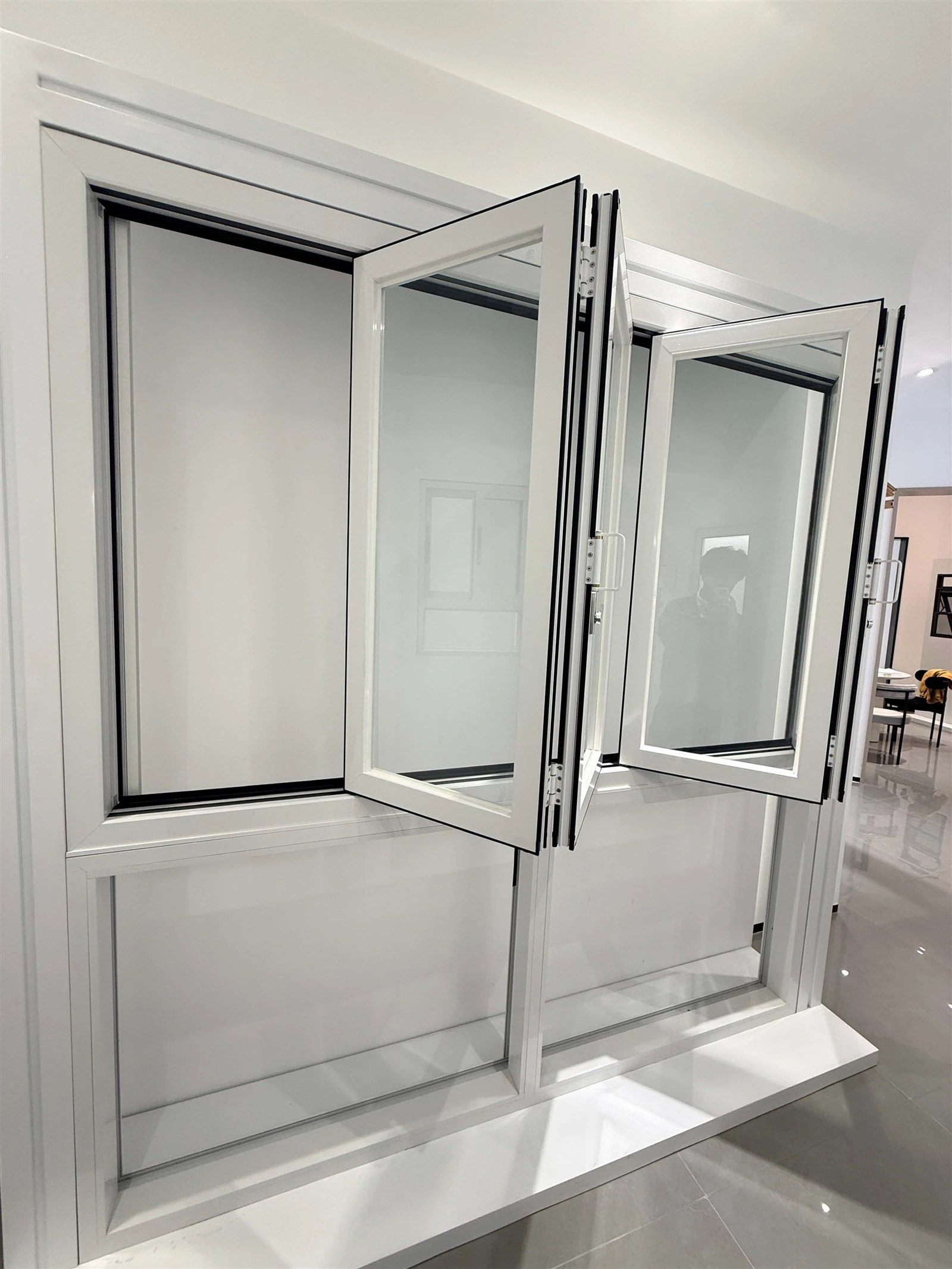

What Does "Tinting" Mean for Thermal Break Aluminium Windows?
Window tinting refers to modifying the glass to reduce visible light transmission (VLT), block solar radiation, or filter ultraviolet rays. There are two primary methods available for thermal break aluminium windows:
- Adhesive window film - a polyester film applied to the glass surface post-installation
- Body-tinted (float) glass - glass manufactured with metallic oxides added to the melt, producing a consistent colour and solar control performance throughout the pane
A third technology - Low-E coated glass - is frequently grouped with tinting methods in online content, but it belongs in a separate category. Low-E controls heat transfer, not visible light. We address it separately below.
Tinting Options: Window Film vs. Factory-Tinted Glass
Option 1: Adhesive Window Film
Window film is a thin polyester sheet - typically 25–200 microns thick - with a pressure-sensitive adhesive backing. It is applied directly to the glass surface, usually on the interior face.
Film types and performance:
| Film Type | UV Rejection | VLT Range | SHGC | Key Feature |
|---|---|---|---|---|
| Dyed film | 85–95% | 20–70% | 0.35–0.65 | Most affordable; may fade over 3–5 years |
| Metalized film | 95–99% | 10–50% | 0.22–0.45 | Strong solar control; some signal interference |
| Carbon film | 95–99% | 20–60% | 0.25–0.50 | No fade; good heat rejection; no signal issues |
| Nano-ceramic film | 95–99% | 30–75% | 0.22–0.40 | Premium performance; near-clear options available |
Advantages of window film:
- Can be applied to existing windows without frame replacement
- Removable and upgradeable
- Wide VLT and tint colour range
- Cost-effective for retrofit projects (5–5–15 per sq ft installed)
Key consideration - IGU compatibility: Applying film to the interior pane of a sealed insulated glass unit (IGU) can create a heat trap effect, potentially causing thermal stress fractures. For double-glazed thermal break windows, use only films rated for use on IGUs and always consult your window manufacturer first. Applying film to sealed IGUs without manufacturer approval may void your warranty.
Option 2: Factory-Tinted Glass (Body-Tinted Float Glass)
Body-tinted glass is manufactured by adding iron, cobalt, selenium, or other metallic oxides to the glass batch during production. The result is a glass pane with consistent colour throughout its thickness - bronze, grey, blue, green, and dark grey are the most common specifications.
Performance characteristics:
| Glass Colour | Approximate VLT | SHGC Range | UV Reduction | Visual Appearance |
|---|---|---|---|---|
| Bronze | 50–55% | 0.55–0.65 | 45–60% | Warm brown tone |
| Grey | 43–55% | 0.52–0.62 | 50–65% | Neutral grey tone |
| Blue-green | 58–75% | 0.45–0.60 | 40–55% | Cool blue-green tone |
| Dark grey | 14–35% | 0.25–0.40 | 65–80% | Strong privacy/solar control |
Advantages of factory-tinted glass:
- Consistent appearance across the entire façade
- No risk of film peeling, bubbling, or fading
- Warranty-safe - specified at the factory before IGU sealing
- Can be combined with Low-E coating in the same IGU unit
- Longer service life than adhesive film (25+ years)
Cost: Body-tinted glass typically adds £15–£50 per m² to the base glass specification. For new build or full window replacement projects, this is the most cost-effective way to achieve consistent solar control performance.
Low-E Glass: Related but Different
Low-E (low-emissivity) glass is frequently listed alongside tinted glass as a "type of window tinting." This is technically inaccurate, and the distinction matters when you are specifying a building envelope.
The key difference:
| Technology | What It Modifies | VLT | Primary Function |
|---|---|---|---|
| Body-tinted glass | Visible light and solar radiation | 14–75% (tinted) | Glare reduction, privacy, solar heat control |
| Window film | Visible light and/or solar radiation | 5–80% (varies) | Solar control, privacy, UV protection |
| Low-E coating | Infrared (heat) only | 40–75% (near-clear) | Thermal insulation - keeps heat in (winter) or out (summer) |
A standard clear Low-E glass can have a VLT above 70% - it looks nearly transparent. Its function is thermal, not optical. You would not describe underfloor heating as "carpet colouring"; the same logic applies here.
That said, Low-E and solar control glass can be combined. A solar control Low-E unit - available from our Low-E glass product range - delivers both:
- Reduced U-value (improved thermal insulation, as low as 0.8–1.1 W/m²K in triple glazing)
- Reduced SHGC (solar heat gain control)
- High VLT (clear, unobstructed view)
For thermally broken aluminium windows that already have a low U-value frame, specifying a solar control Low-E IGU is the most comprehensive performance upgrade available - and the specification we most often recommend for commercial façades, south-facing residential elevations, and high-performance builds targeting UK Part L or EU EPBD compliance.

Full Comparison: Which Option Is Right for Your Project?
| Window Film | Body-Tinted Glass | Solar Control Low-E | |
|---|---|---|---|
| Application method | Retrofit (post-installation) | Factory (new build / replacement) | Factory (new build / replacement) |
| UV rejection | 85–99% | 45–80% | 90–99% |
| VLT range | 5–80% | 14–75% | 40–75% |
| SHGC range | 0.22–0.65 | 0.25–0.65 | 0.08–0.35 |
| U-value impact | Minimal | Moderate | Significant improvement |
| Cost (per sq ft) | 5–5–15 (installed) | 20–20–60 (unit cost) | 8–8–25 (add-on to IGU) |
| Lifespan | 5–15 years | 25+ years | 25+ years |
| Reversible? | Yes | No | No |
| Warranty safe? | ⚠️ Check with manufacturer | ✅ Yes | ✅ Yes |
| Best for | Retrofit, rental properties, budget projects | New build, consistent façade aesthetics | High-performance specs, commercial, Part L compliance |
Benefits of Tinting Thermal Break Aluminium Windows
1. UV Protection
High-performance window films can block 95–99% of UV radiation - The Skin Cancer Foundation confirms that UV window film blocks more than 99% of both UVA and UVB rays when correctly specified. Standard body-tinted glass typically achieves 45–80% UV reduction depending on colour and thickness. For heritage furniture, artwork, or medical-grade interiors, high-performance film provides the strongest UV barrier.
2. Solar Heat Gain Reduction
An uncoated clear glass IGU typically carries an SHGC of 0.55–0.70. A dark grey body-tinted glass unit reduces this to 0.25–0.40; a solar control Low-E coating can achieve SHGC as low as 0.08. This directly reduces cooling loads, and according to the U.S. Department of Energy's window energy performance guidance, solar control glazing can reduce cooling energy consumption by 25–35% in hot-climate or sun-facing applications.
3. Glare Reduction
For offices, showrooms, and living rooms with large south or west-facing windows, glare is a significant comfort and productivity issue. A VLT of 35–50% - achievable with mid-range tinted glass or film - typically provides comfortable working conditions without making the interior feel dark. For commercial glazing with strong afternoon sun exposure, we often specify VLT in the 20–35% range for west-facing elevations.
4. Privacy
Reflective films and darker body-tinted glass can provide daytime privacy by creating a mirror effect on the exterior surface. Note that this reverses at night when interior lighting is stronger than exterior - tinted glass alone does not provide consistent round-the-clock privacy.
5. Aesthetic Consistency
For commercial buildings and residential developments where façade uniformity is important, factory-tinted glass delivers a consistent colour and reflectivity across all window units - something that aftermarket film cannot reliably replicate at scale.
Potential Drawbacks and How to Manage Them
Reduced interior light: A VLT below 30% can make rooms feel noticeably darker, particularly in north-facing or low-light environments. Balance solar control goals against daylighting requirements. For UK climates where overcast skies are frequent, we generally recommend VLT above 35% for primary living and working spaces.
Nighttime visibility reversal: Reflective films that provide daytime privacy become transparent at night. For consistent privacy, combine with blinds or a higher privacy screen element.
Thermal stress on IGUs: As noted above, applying film to the sealed unit in a double or triple-glazed window creates heat differential stress. Use only IGU-rated film products and always confirm compatibility with your window manufacturer before application.
Warranty implications: Check your window warranty terms before specifying aftermarket film. SGL's own product warranty covers all factory-specified glass options, including body-tinted glass and Low-E coatings. For retrofit film on existing SGL windows, contact our technical team to confirm compatibility before application.
Fading and maintenance for film: Dyed and metalized films typically have a service life of 5–10 years before visible fading. Nano-ceramic and carbon films last significantly longer - 15+ years - with minimal maintenance. Factory glass options require no additional maintenance beyond standard window cleaning.
How to Choose the Right Specification for Your Climate
Northern Europe and the UK (temperate, overcast): Thermal insulation is the priority. Specify a high-performance Low-E IGU for the thermal break frame and consider light tinting (VLT 45–60%) only on south or west-facing elevations. Avoid over-tinting on north-facing windows, which need to maximise the limited daylight available.
Middle East, South Asia, and Southeast Asia (hot, high solar): Solar heat gain reduction is the primary concern. Specify dark-grey or solar-control tinted glass (SHGC 0.25–0.35; VLT 25–40%) combined with a solar control Low-E coating for maximum performance. Energy-efficient windows with SHGC below 0.25 are strongly recommended for west and south elevations.
North America and Central Europe (mixed climate): Balance heating and cooling loads. A mid-range solar control Low-E glass (SHGC 0.20–0.30; VLT 40–60%) with a U-value below 1.2 W/m²K typically provides the best year-round performance. NFRC window energy rating standards provide a useful benchmark for comparing certified product performance across suppliers.
our projact

Kazakhstan
Canada

Regulations and Warranty Checklist
Before specifying tinted glass or film for thermal break aluminium windows, work through the following:
Understanding thermal performance standards and U-value ratings is essential before finalising any glass specification. Different tinting methods can meaningfully alter a window's certified U-value and SHGC, which may affect compliance with local building energy codes.
| Consideration | UK | EU | North America |
|---|---|---|---|
| Energy compliance standard | Building Regs Part L (U ≤ 1.4 W/m²K residential) | EPBD / EN 673 | ASHRAE 90.1 / IECC |
| Reflectivity restrictions | Planning consent may apply in conservation areas | Local authority planning rules vary | State/municipality varies |
| Warranty | Confirm with manufacturer before film application | Confirm with manufacturer before film application | NFRC-rated products recommended |
| Film installer certification | IWFA-certified installer recommended | IWFA-certified installer recommended | IWFA certification standard |
For listed buildings, conservation areas, or any project with specific planning conditions, consult your local planning authority before specifying high-reflectivity external coatings. The appearance of the finished building, including glass reflectivity, may be a planning condition in some jurisdictions.
Frequently Asked Questions
Can thermal break aluminium windows be tinted?
Yes - and the thermal break frame itself has no effect on the tinting options available. The choice comes down entirely to the glass specification. For new build or replacement windows, factory-tinted glass or solar control Low-E is the most durable and warranty-safe option. For existing windows, adhesive window film provides a practical retrofit solution when specified and installed correctly.
Does window tinting void the warranty on my thermal break windows?
Aftermarket film applied to sealed IGU units can void the warranty on some products by causing thermal stress. Factory-specified tinted glass or Low-E coatings - specified at the time of order - are fully covered under SGL's standard product warranty. If you have existing SGL windows and want to add film, contact our technical team to confirm IGU compatibility before proceeding.
What is the difference between tinted glass and Low-E glass?
Tinted glass absorbs solar radiation to reduce glare and heat gain; it modifies visible light transmission (VLT 14–75%) and typically has an SHGC of 0.25–0.65. Low-E glass uses a metallic oxide vapour deposition coating to reflect infrared heat while maintaining high VLT (40–75%). Low-E looks nearly transparent but dramatically improves thermal insulation (U-value as low as 0.8 W/m²K). They serve different purposes and can be specified together in the same IGU.
Can you apply window film to double-glazed thermal break windows?
Yes, but only on the external or internal glass surface - not between the panes of a sealed unit. Applying film to the internal face of the outer pane of a sealed unit traps heat in the cavity and can cause stress fractures. Use only film products certified for use on IGUs, and confirm compatibility with your window manufacturer.
How long does window film last on aluminium frames?
Dyed films typically last 5–8 years before visible fading. Metalized and carbon films last 8–12 years. Premium nano-ceramic films last 15+ years with proper installation on a clean, smooth surface. Factory-specified tinted glass and Low-E coatings last the lifetime of the IGU - typically 25+ years.
Is window tinting subject to planning restrictions in the UK?
Residential window tinting is generally permitted without planning consent under UK permitted development rights. However, high-reflectivity films or glass coatings on commercial buildings, or any tinting in a listed building or conservation area, may require prior approval. Always check with your local planning authority if in doubt.
Conclusion
Thermal break aluminium windows can be tinted effectively through two routes: adhesive window film for retrofit applications, and factory-specified tinted glass for new build or replacement glazing. Low-E glass is not a tinting method - it is a thermal coating that can complement, but does not replace, solar control glass or film.
The right choice depends on three variables: project stage (new build versus retrofit), performance priority (UV protection, glare control, solar heat reduction, or thermal insulation), and budget. For most commercial and high-performance residential applications, we recommend factory-specified solar control glass - ideally combined with a Low-E coating - as the most durable, warranty-safe, and performance-optimised solution.
For further guidance on glass selection, our comprehensive resource on choosing the right glass for your aluminium windows covers glass types, performance trade-offs, and specification guidance in detail.
If you are specifying tinted or solar control glass for a thermal break aluminium window project, our glazing team can advise on glass selection, SHGC and VLT targets, and IGU build-up. Send us your project brief and we will return a specification recommendation within 48 hours.


