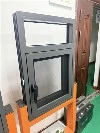
In the field of modern architecture and home design, the choice of door and window materials is always a topic of concern. For homeowners, architects, and real estate developers, a frequently asked question is: what is the expected lifespan of aluminum alloy doors?
Based on extensive experimental data, performance reports of profiles, and comprehensive cost analysis, SGL concludes that the expected lifespan of high-quality aluminum alloy doors in standard environments is typically between 30 and 50 years. With fluorocarbon coating surface treatment and rigorous maintenance, the lifespan can be extended to over 60 years, far exceeding the lifespan of uPVC (usually 20-35 years) and traditional wood (usually 20-30 years).
The lifespan of aluminum alloy doors is primarily determined by the quality of the aluminum alloy substrate, the level of surface treatment technology, the aging rate of the thermal break strips, the mechanical cycle life of the hardware accessories, and the installation process.
As an expert in building materials and deep processing with nearly 20 years of experience, SGL deeply analyzes each factor that determines the lifespan of aluminum alloy doors. We will not only focus on the numbers but also explore the underlying principles, providing you with a detailed guide to the entire lifecycle of aluminum alloy doors. This report is not only to answer "how long will it last," but also to answer "how to make it last longer."
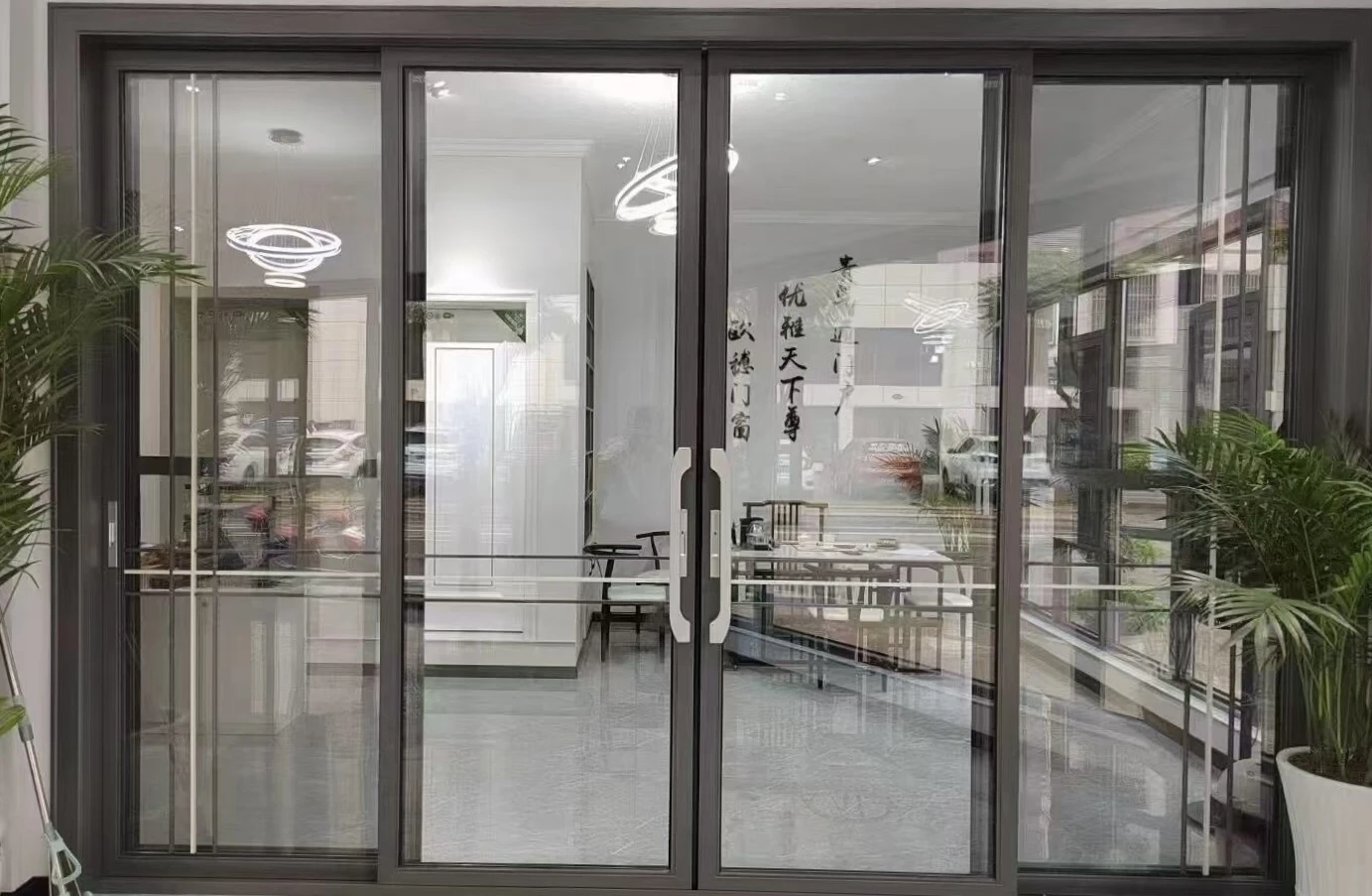
1. Analysis of Aluminum Alloy Door Profiles
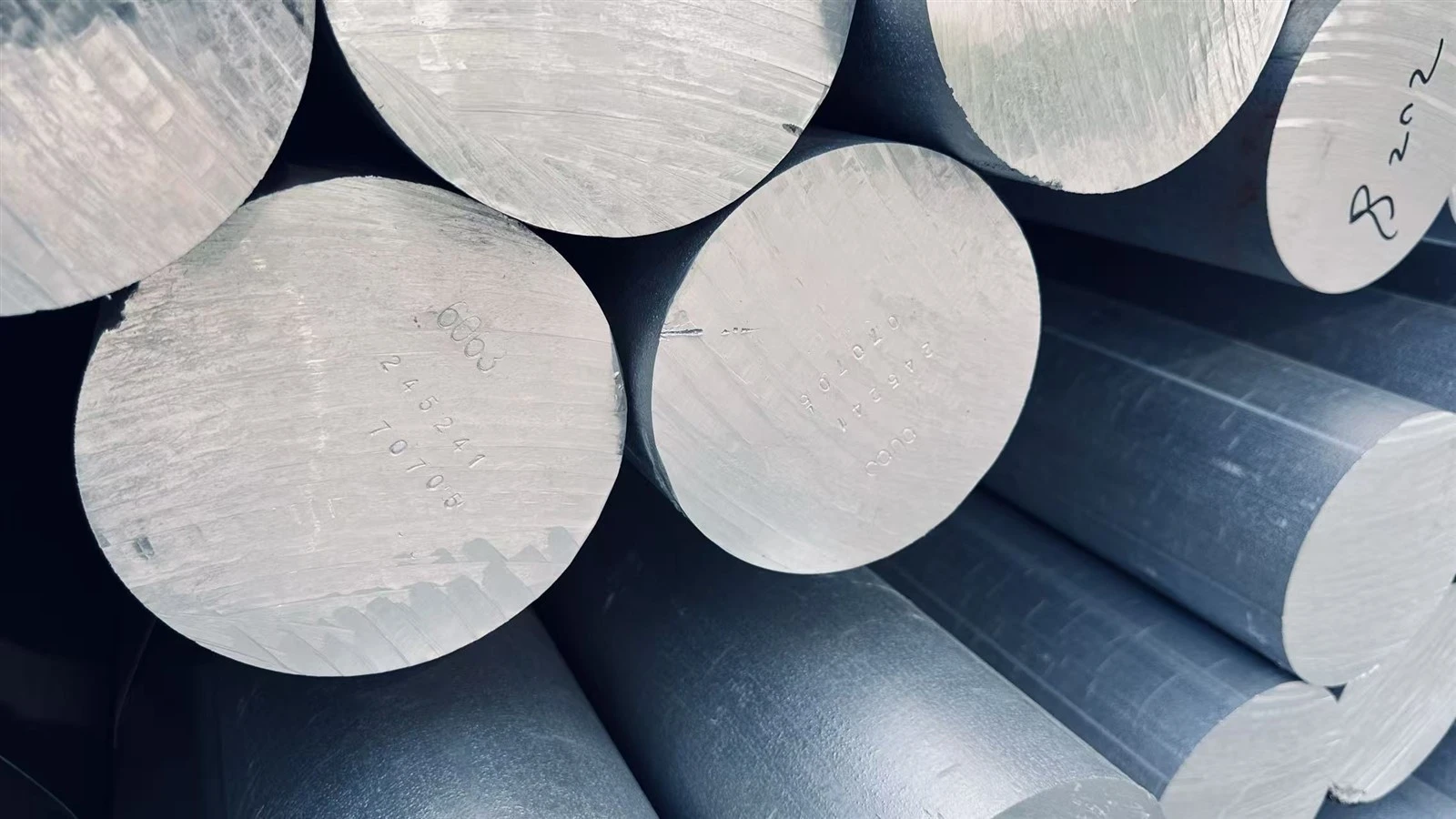
The longevity of aluminum alloy doors is due to the excellent properties of aluminum. However, not all aluminum used in doors and windows is the same. The building door and window industry primarily uses 60 series aluminum-magnesium-silicon alloys. When choosing building aluminum materials, the model and specifications are crucial in determining the performance and price of the doors and windows. Simply put, the model mainly depends on two parts: the aluminum alloy type (such as 6063, 6060) and the heat treatment state (such as T5, T6, T66).
1.1 6063-T5, 6063-T6, 6060-T66
6063-T5 is the mainstream choice for architectural doors and windows, especially widely used in national standards. This alloy mainly contains 0.45%-0.9% magnesium and 0.2%-0.6% silicon. It has good extrusion performance and surface treatment effects, suitable for making complex cross-sections, such as thermal break aluminum doors and windows. It has moderate hardness and strength, good ductility, and is not easy to break during processing. 6063-T5 has extremely high corrosion resistance. Unlike aerospace-grade aluminum, when 6063-T5 is exposed to the atmosphere, a dense, hard, and transparent aluminum oxide film quickly forms on its surface. This film has a "self-healing" ability – if the surface is scratched, a new oxide film will quickly form, preventing further corrosion of the metal.
6063-T6: Higher hardness and strength than T5, suitable for large curtain walls or sunrooms that require higher hardness. However, it should be noted that its high hardness may cause it to break during certain processing steps (such as inserting thermal break strips).
6060-T66: It is more common in European standards. Its magnesium and silicon content ratio is different from 6063, with a silicon content of 0.5%-0.9% and a magnesium content of 0.35%-0.6%. It has higher overall strength and hardness, and is even referred to as "aerospace grade." It is particularly suitable for applications requiring high strength and wind pressure resistance, such as floor-to-ceiling windows or sunrooms in high-rise buildings. It is very suitable for use in coastal and humid areas, but its cost is the highest.
Many low-end windows and doors, in order to reduce costs, may use recycled aluminum that has not undergone strict control of impurity content during remelting. Impurities (such as excessive iron content) can disrupt the continuity of the oxide film, causing pitting corrosion in the aluminum material within a few years in coastal environments. Therefore, considering both cost and practicality, choosing the 6063-T5 alloy with strictly controlled impurities is the best solution to ensure the longevity of aluminum alloy doors and windows.
2. Surface Treatment
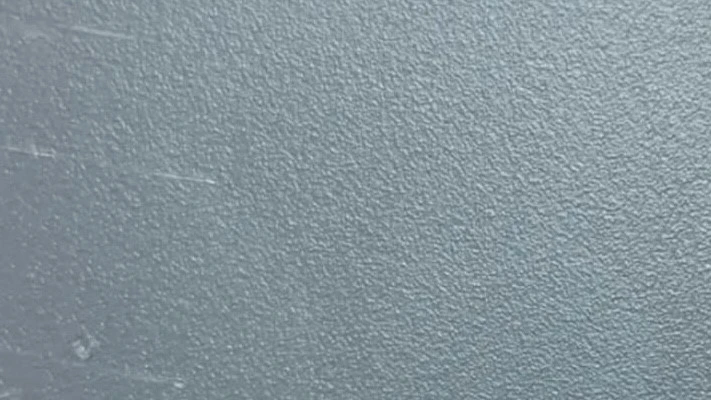
Common surface treatment methods for aluminum profiles mainly include anodizing, electrophoretic coating, powder coating, fluorocarbon spraying, and ceramic electrophoretic coating. Each treatment method has its own advantages.
2.1 Powder Coating
This method uses powder coatings and employs electrostatic spraying. Using a friction spray gun, the powder particles are given a positive charge under the influence of accelerated air, and then come into contact with the negatively charged profile, resulting in electrostatic adsorption, followed by high-temperature curing.
- Expected lifespan: More than 20 years.
- Applicability: Suitable for interior doors or areas with low levels of ultraviolet radiation.
- Potential risks: If there are small damages to the coating surface (such as scratches during installation), salt and moisture can penetrate beneath the coating, spreading across the aluminum surface like insects, forming filamentous blisters and corrosion marks. This can lead to large-scale peeling of the coating.
2.2 Fluorocarbon Spraying
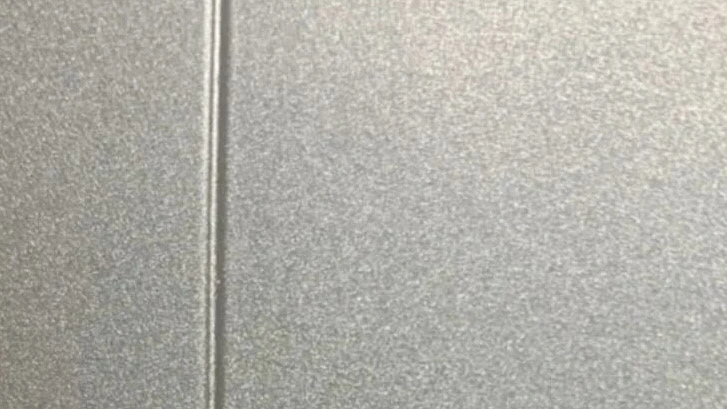
This method applies a polyvinylidene fluoride (PVDF) paint coating to the surface of the aluminum alloy substrate through electrostatic action. It offers long-lasting color retention, anti-aging, corrosion resistance, and resistance to atmospheric pollution, making it a high-end surface coating process.
- Expected lifespan: PVDF coated aluminum doors can maintain their color and resist chalking for 30-40 years.
2.3 Anodizing
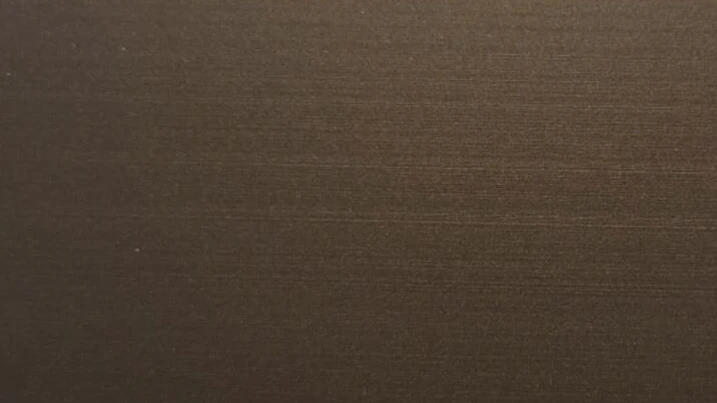
Extruded aluminum alloy profiles have weak surface corrosion resistance. Anodizing is necessary to treat the surface of the aluminum profiles to increase their corrosion resistance, wear resistance, and aesthetic appearance. Under certain process conditions, the pre-treated profile undergoes anodizing on its surface, forming a dense, porous, and highly adsorptive Al2O3 film layer.
- Expected lifespan: Theoretically, the same lifespan as the building (50-80 years). This is because there is no "coating" to peel off. This oxide film has extremely high hardness (Mohs hardness 9, second only to diamond) and excellent wear resistance.
3. Thermal Break Technology
Modern aluminum alloy doors almost all utilize "thermal break" technology. This technology involves embedding a thermal insulation strip between the inner and outer layers of aluminum to interrupt heat transfer. This insulation strip directly affects the lifespan of the entire door.
3.1 Polyamide 66 (PA66)
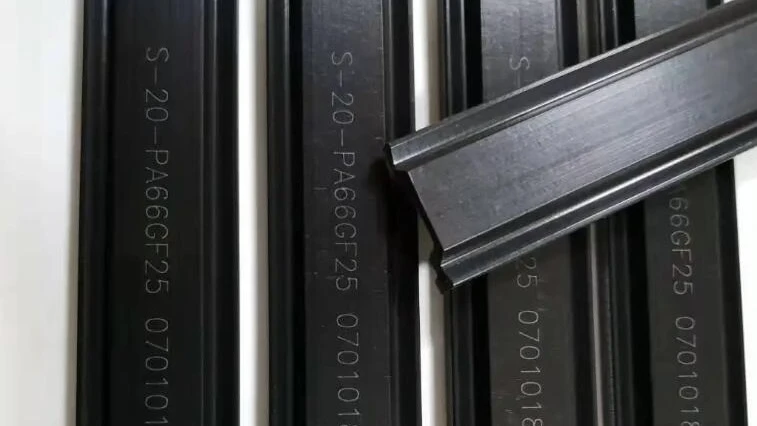
The globally recognized best material for thermal insulation strips is nylon 66 (PA66 GF25) with 25% glass fiber.
The linear thermal expansion coefficient of PA66 is very close to that of aluminum alloy. This means that the expansion and contraction of the insulation strip and the aluminum material are synchronized during the scorching heat of summer and the bitter cold of winter nights. Due to the consistent expansion coefficient, no shear stress is generated at the connection points due to repeated thermal expansion and contraction. This ensures that the thermal break structure will not loosen, crack, or cause door deformation for 30-50 years, indirectly increasing the lifespan of the door.
3.2 Hidden Dangers of PVC Thermal Insulation Strips
Some low-priced aluminum doors on the market use PVC thermal insulation strips. However, PVC has low strength, poor heat resistance, and a significantly different thermal expansion coefficient compared to aluminum. After several cycles of heating and cooling, PVC strips become brittle and shrink, causing the aluminum frame to loosen and even lose its thermal insulation function. The lifespan of PVC thermal insulation strips is usually only 5-10 years; once it fails, the structure and watertightness of the entire door are compromised.
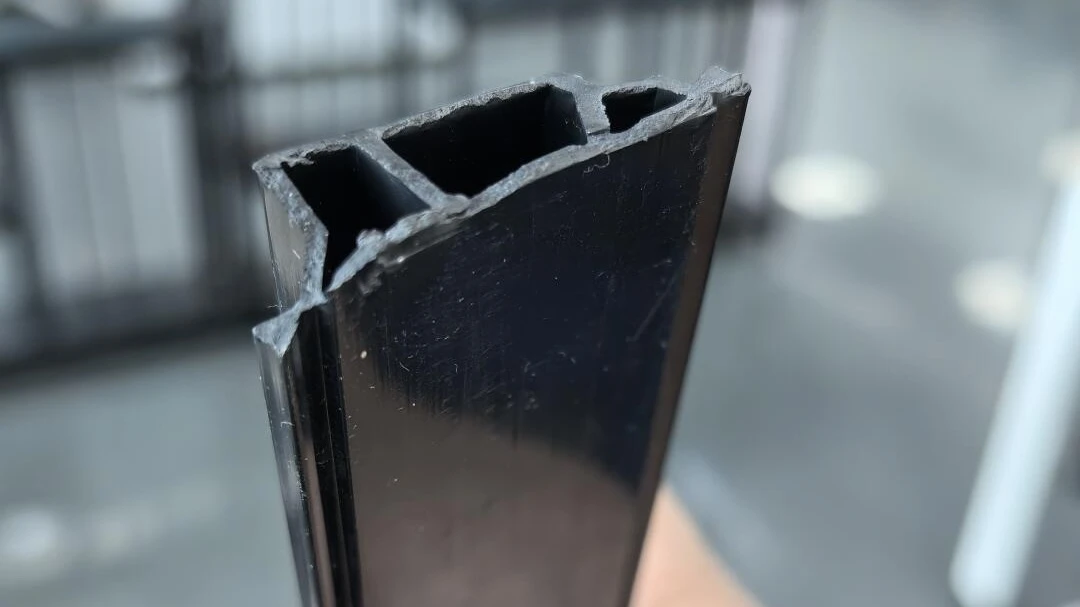
SGL recommends that when purchasing aluminum alloy doors, you must confirm that the thermal insulation strip is made of PA66. This is a crucial detail to ensure that the door structure lasts for more than 40 years.
4. Hardware and Sealing Strips
While aluminum frames can last for half a century, a door is a system. The hardware and sealing strips are the fastest-wearing parts of this system, and their lifespan often determines the "maintenance-free" period of the door.
4.1 Sealing Strips
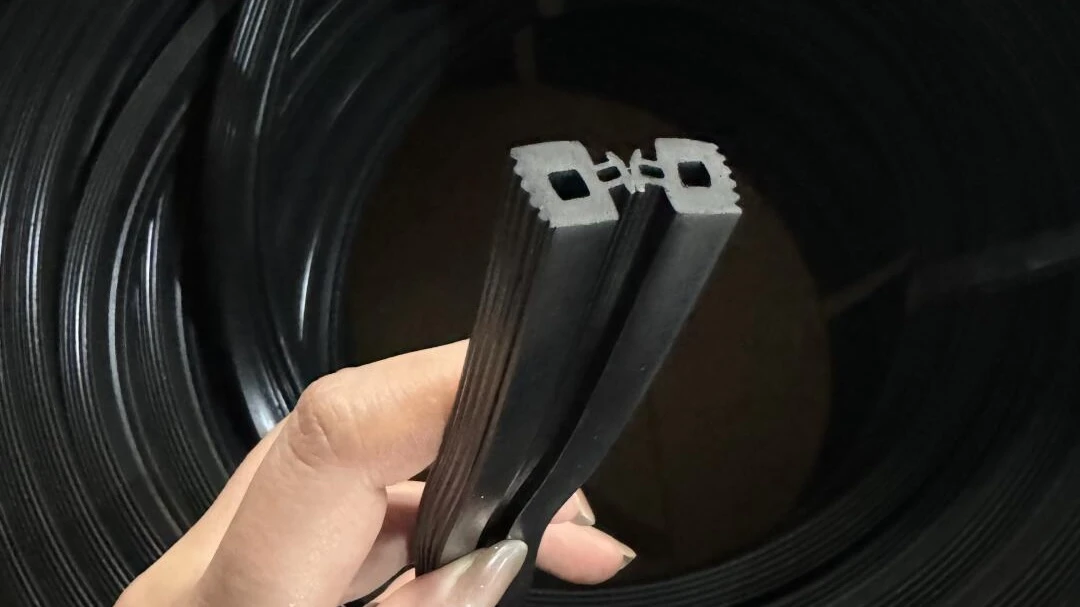
The seal between the door leaf and the door frame determines whether there is air leakage, water leakage, and sound insulation. SGL uses EPDM (ethylene propylene diene monomer) rubber. High-quality EPDM sealing strips have excellent UV resistance and ozone resistance, and their lifespan is 8 times that of PVC strips, reaching 20-40 years. They also have good elasticity, recovering their original shape after long-term compression, maintaining sealing pressure.
4.2 Hardware
The hardware brand used by SGL is Guitto, a company specializing in high-end door and window hardware systems. Headquartered in Nanhai District, Foshan City, Guangdong Province, its core business is providing customers with cost-effective overall solutions for door and window hardware. Guitto adheres to Danish craftsmanship and quality standards and is a preferred supplier of high-quality door and window hardware systems.
Guitto's hinges, locks, pulleys, and other products are all made of high-quality stainless steel, which can adapt well to various environments, such as coastal and cold regions. After 20,000 cycles of use testing, these hardware components still maintain normal operation. Based on 5 openings and closings per day in a typical household, 20,000 cycles is equivalent to 11 years of service life. In reality, as long as they are not overloaded and are regularly lubricated, high-quality hardware can typically last 20-30 years.

5. Summary and Recommendations
What is the expected lifespan of aluminum alloy doors?
- 30-40 years (standard configuration, normal use).
- 50-60 years or more (top-tier configuration: 6063-T6 + PVDF/AA25 + EPDM + stainless steel hardware, with regular maintenance).
Compared to easily aging uPVC and easily rotting wood, aluminum alloy doors are currently the most durable, economical, and environmentally friendly long-term investment solution on the building market. Their "lifespan" is often not determined by the material itself, but by how you, as the consumer, choose the configuration and how you treat it.
SGL's ultimate advice to buyers: If you want your door to last for half a century:
- Choose the right base material: It must be virgin aluminum 6063-T5.
- Thermal break strips: Must be PA66 GF25 nylon strips.
- Surface treatment: Choose PVDF or anodizing for coastal areas; choose high-quality powder coating for inland areas.
- Hardware: Must use 316 stainless steel in coastal areas; choose stainless steel tracks for sliding doors.
- Sealing strips: Specify EPDM material.
By following these guidelines, your aluminum alloy door will no longer be just a simple building component, but an asset that can be passed down through generations.SGL's aluminum alloy doors meet all of the above requirements. You can click the link to browse and choose from a wide variety of styles.http://www.sgl-doors-windows.com/aluminum-doors/
FAQ
Q: Are aluminum alloy doors really more durable than uPVC or solid wood doors?
A: Yes, the data shows that this is indeed the case. Aluminum alloy doors have a natural advantage in structural stability. High-quality aluminum alloy doors have an expected lifespan of "30-50 years," or even longer. In contrast, uPVC materials are susceptible to UV radiation and may discolor and become brittle after prolonged exposure, with an average lifespan of typically "20-35 years." While solid wood doors are aesthetically pleasing, they are highly susceptible to warping or rotting due to humidity and usually require expensive maintenance (such as sanding and painting) every few years to maintain a "20-30 year" lifespan. Choosing aluminum alloy is essentially choosing a hassle-free solution.
Q: I live by the sea, will aluminum alloy doors rust?
A: Aluminum alloy itself will not "rust" like iron (producing red rust), but in the high-salt spray environment of the seaside, if not properly treated, the surface may develop blistering or pitting (salt corrosion). To ensure a lifespan of "30 years or more" by the sea, you cannot just look at the style; you must pay attention to the surface treatment process. Experts strongly recommend choosing "PVDF fluorocarbon coating or anodizing treatment with a thickness of 25 microns." In addition, the installation of hardware is crucial; "316-grade stainless steel screws" and insulating gaskets must be used to prevent electrochemical corrosion caused by contact between different metals.
Q: Everyone says "thermal break aluminum" is good, but will the black thermal insulation strip in the middle age and break?
A: This depends on the material of the thermal insulation strip. If your door uses a cheap PVC thermal insulation strip, there is indeed a risk of it becoming brittle and cracking after "5-10 years," which can lead to frame deformation and even water leakage. However, high-end aluminum doors use "PA66." This material has extremely high strength, and its thermal expansion coefficient is almost the same as that of aluminum alloy, allowing for synchronized thermal expansion and contraction. The design life of PA66 thermal insulation strips is usually the same as the aluminum material itself, reaching "40-50 years" without structural failure. When purchasing, please be sure to check for the "PA66" laser marking on the thermal break strip.