


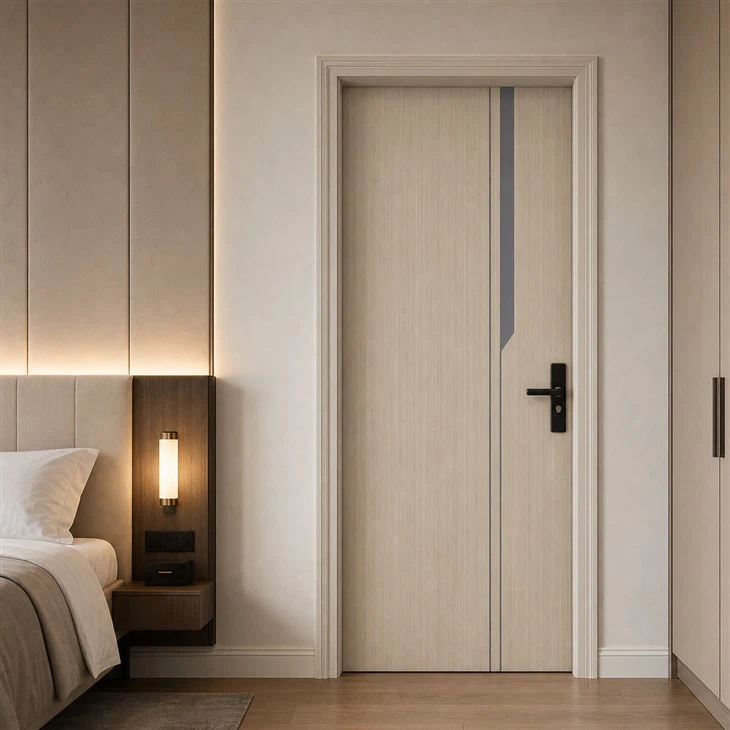

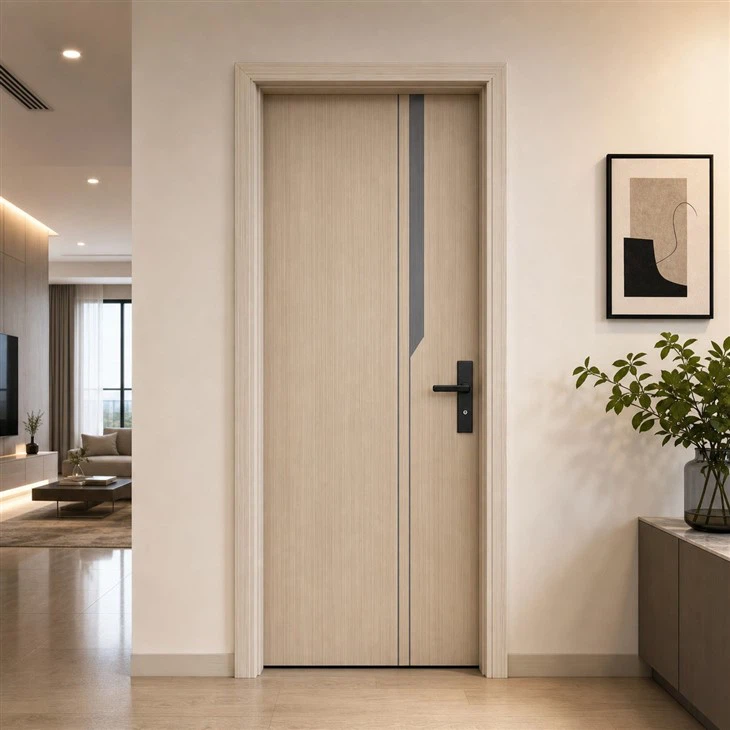
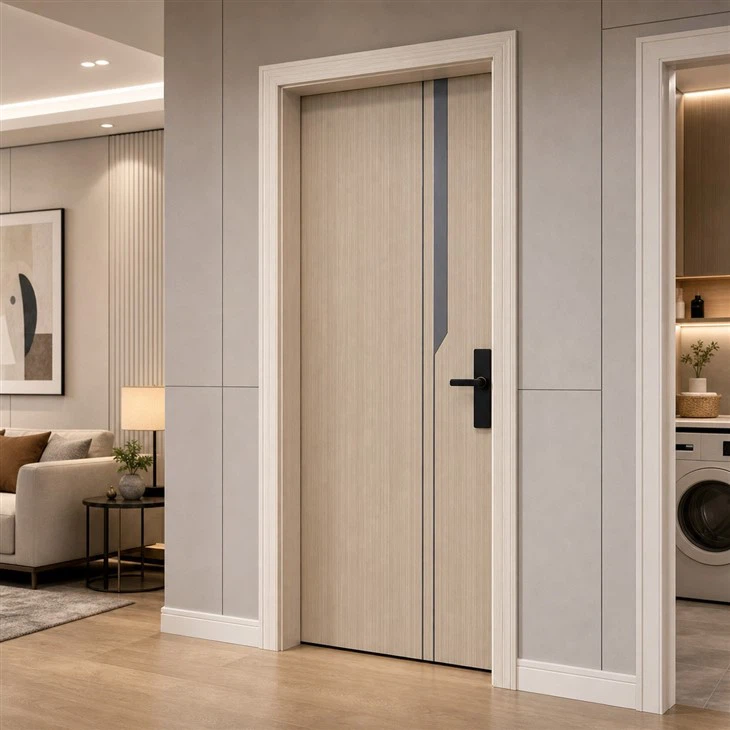
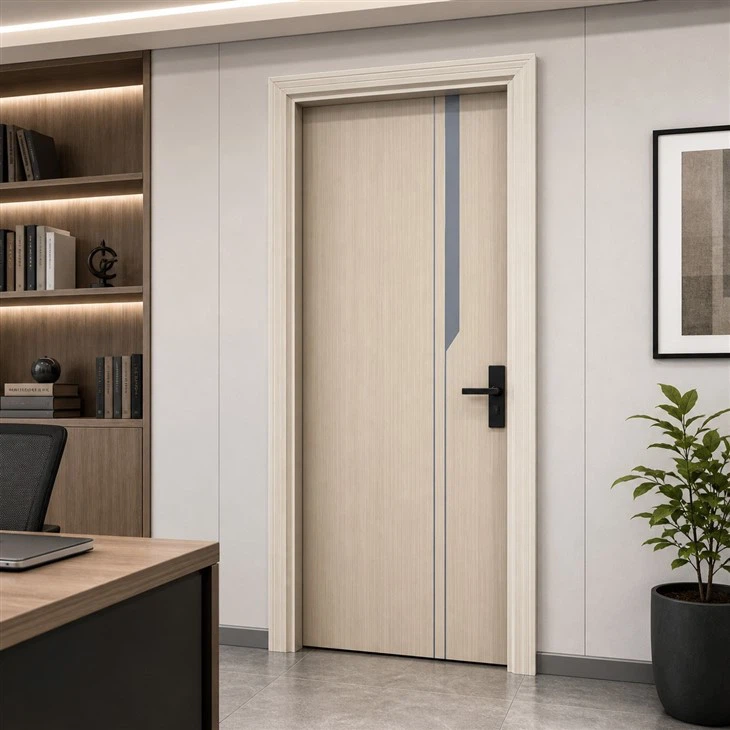
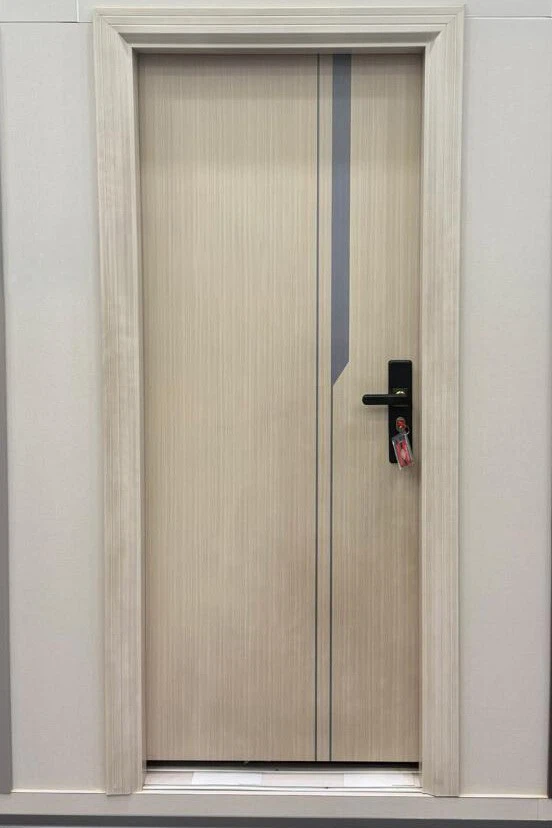
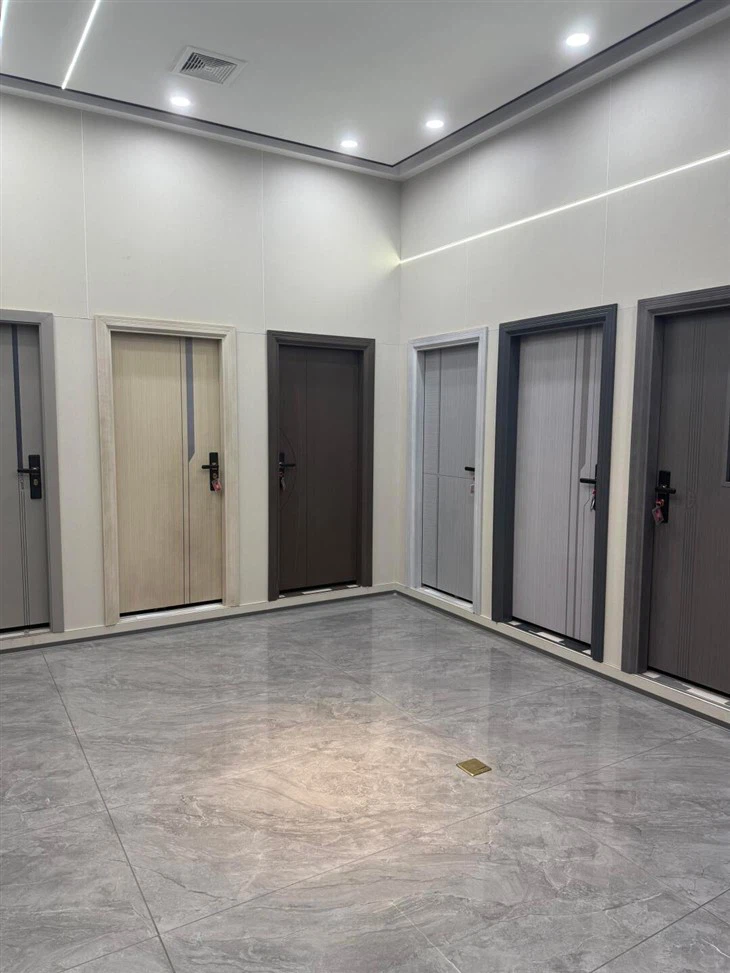
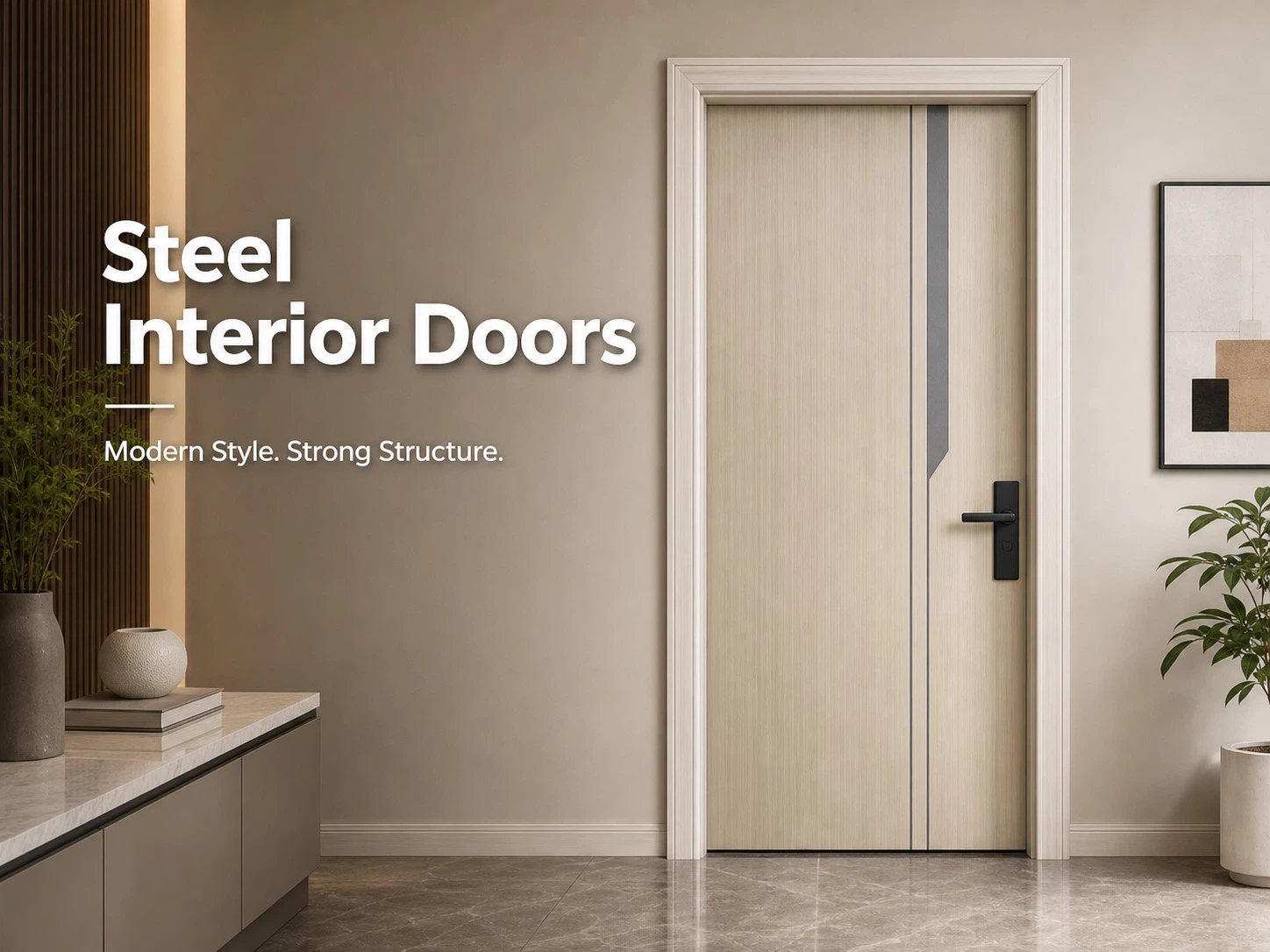
Steel Interior Doors
Shaanxi SGL Doors&Windows Technology Co., Ltd. is one of the most reliable manufacturers and suppliers of steel interior doors in China, also supports customized service. Please feel free to wholesale high quality steel interior doors for sale here from our factory. If you have any enquiry about pricelist and quotation, please feel free to email us.
Steel Interior Doors
Interior doors don't face weather, intruders, or fire codes. So why specify steel?
The answer is context. In commercial buildings, institutional facilities, and industrial environments, interior doors endure high traffic, impact loads, and demanding aesthetic requirements that hollow-core wooden doors can't handle. Steel interior doors solve problems that other materials leave unsolved.
This guide focuses on the cases where steel outperforms alternatives-and where it doesn't.
When Steel Interior Doors Make Sense
Not every interior opening needs steel. The material choice depends on the use case.
- High-traffic commercial: Office buildings, hotels, and hospitals see hundreds of daily cycles through corridor doors. Hollow-core wood doors fail prematurely in these conditions. Steel resists the abuse.
- Impact risk areas: Doors near carts, gurneys, or heavy equipment benefit from steel's dent resistance. Healthcare facilities, warehouses, and schools specify steel for this reason.
- Acoustic separation: Conference rooms, recording studios, and private offices need doors that actually block sound. Steel doors with acoustic seals perform better than wood alternatives.
- Aesthetic coordination: Industrial-style interiors, lofts, and modern commercial spaces often use steel doors for visual consistency with steel windows and structural elements.
- Security interiors: Server rooms, cash offices, and restricted areas within a building use steel doors to control internal access.
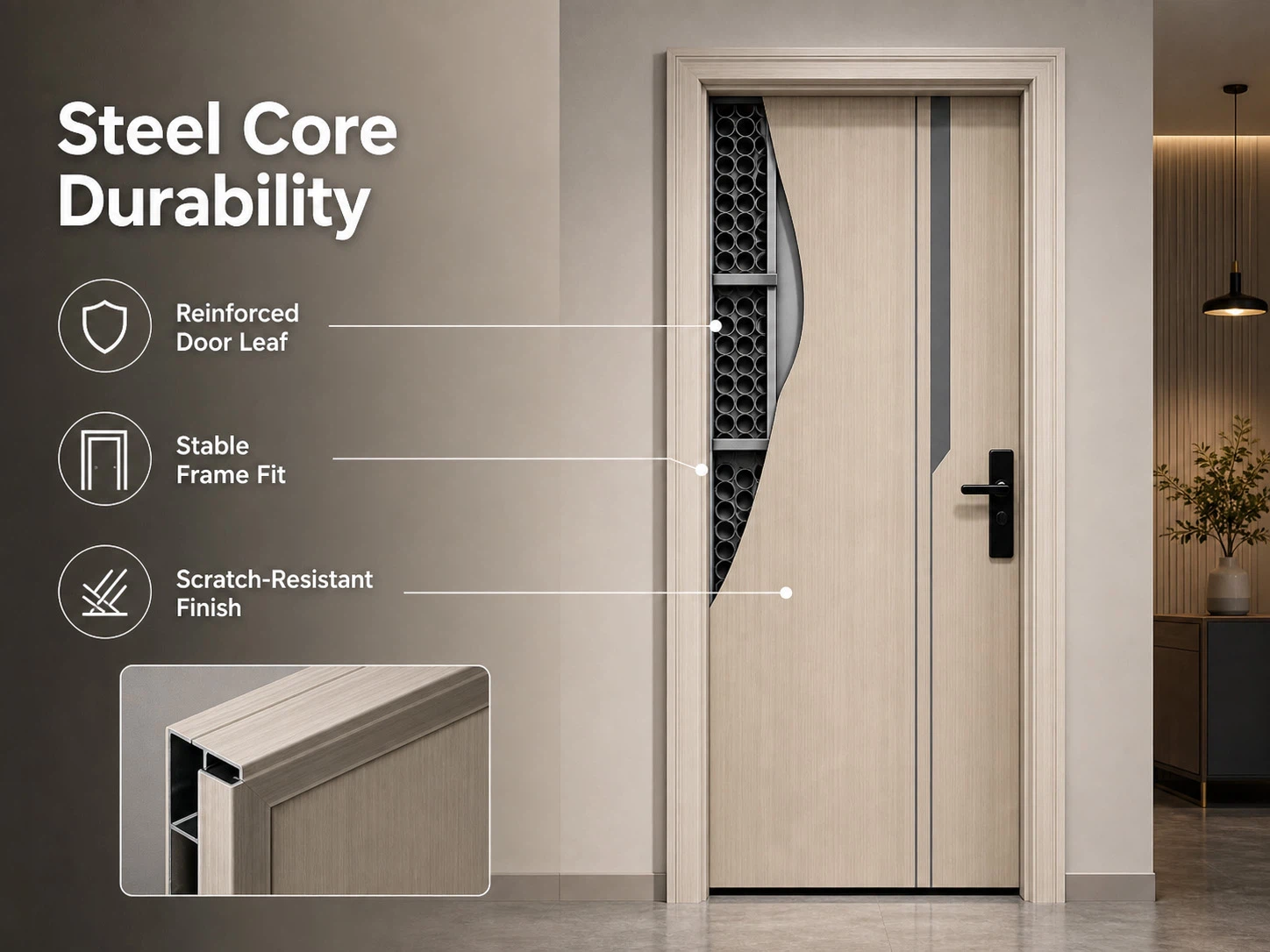
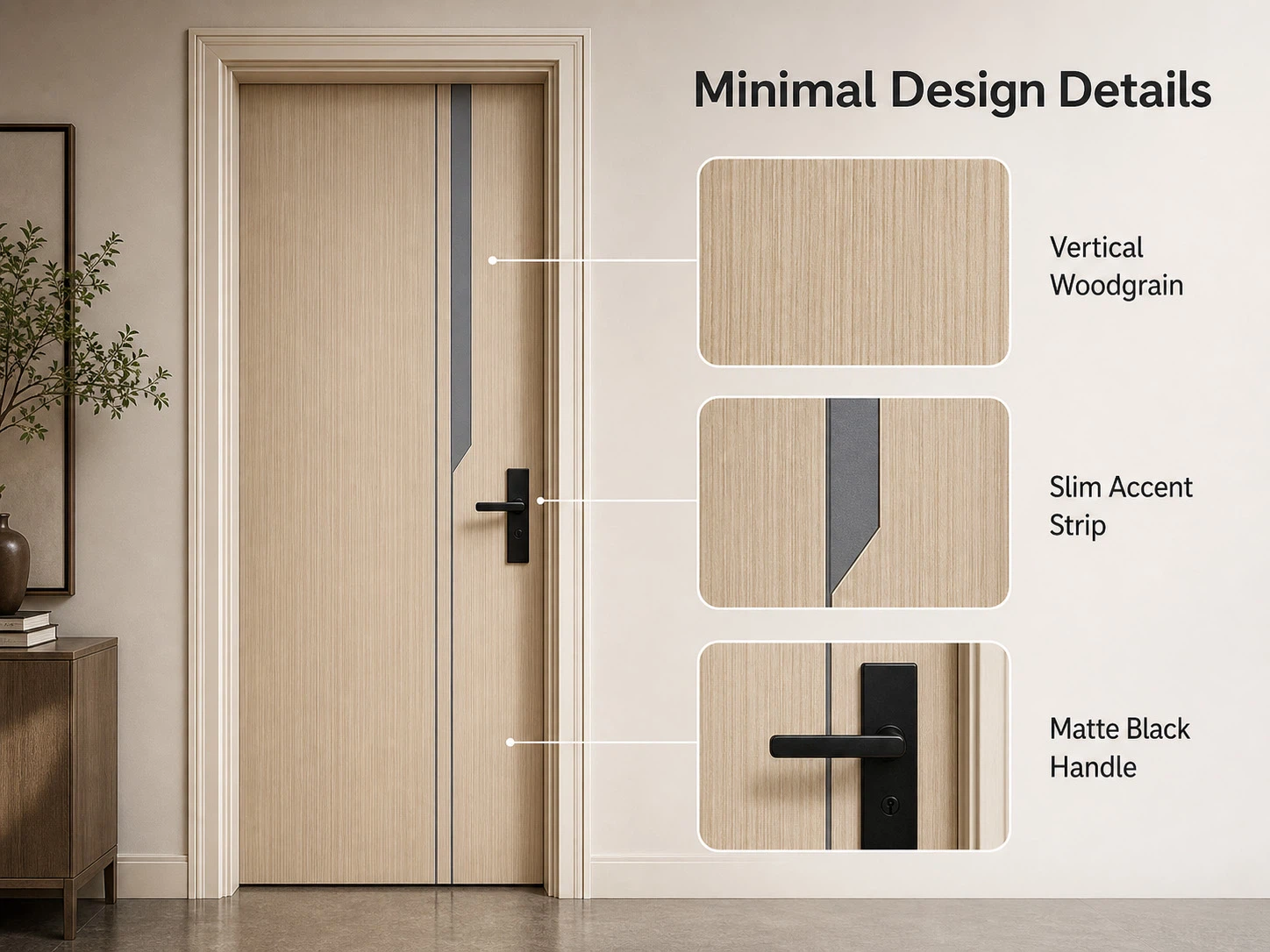

Product Parameters
| Parameter | Specification |
|---|---|
| Frame material | Galvanized steel, 1.0–1.5mm |
| Steel skin | 0.5–0.8mm (light-duty) / 0.8–1.0mm (standard) |
| Standard sizes | 700×2000mm, 800×2000mm, 900×2100mm |
| Max dimensions | 1200×2700mm (standard) / 1500×3000mm (heavy-duty) |
| Door thickness | 40–50mm |
| Sound insulation | 30–45 dB Rw |
| Frame depth | 70–100mm |
| Finish | Powder coat, RAL range |
| Hardware | Standard cylindrical or mortise lockset prep |
| Glazing | Optional vision panels, louver inserts |
Acoustic Performance
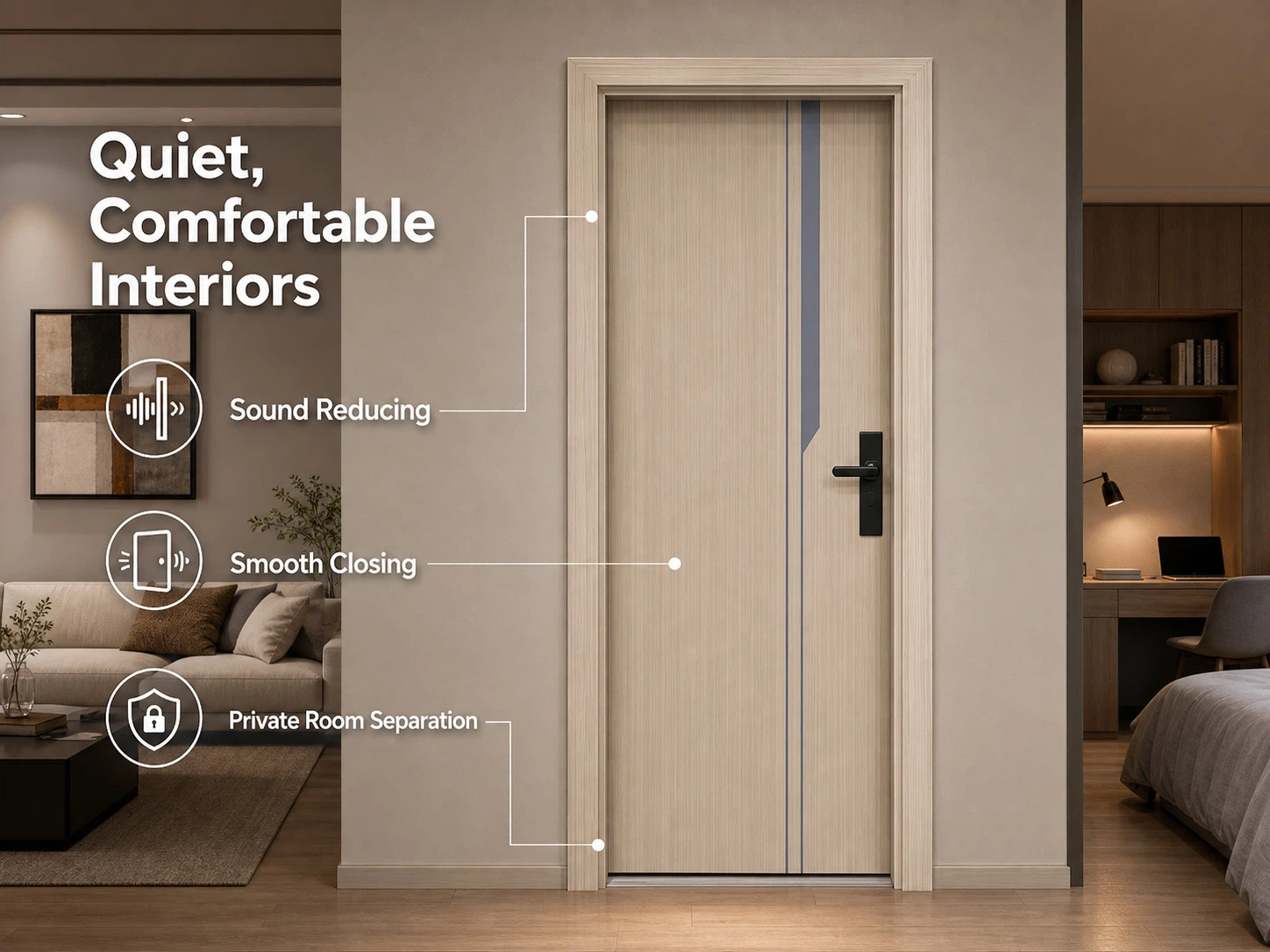
Sound control is the strongest technical argument for steel interior doors.
Wooden doors are hollow inside. Sound travels through the cavity. Even solid-core wood doors have internal voids and weaker perimeter seals. Steel doors, with mineral wool or solid insulation cores, block sound more effectively.
STC ratings (Sound Transmission Class) measure acoustic performance:
- Standard hollow-core wood door: STC 20–25
- Solid-core wood door: STC 30–35
- Steel door with acoustic seals: STC 35–45
For conference rooms and private offices requiring meaningful speech privacy, STC 35 minimum is a practical target. This requires both the door leaf and frame to be specified with acoustic sealing.
Acoustic door construction includes:
- Steel skins 0.8mm minimum
- Dense mineral wool or gypsum-core insulation
- Acoustic perimeter seals (automatic drop seals at threshold)
- Glazing with appropriate glass thickness for the acoustic requirement
- Continuous seal around the frame perimeter
Acoustic performance requires the entire assembly-door, frame, and seals-to work together. A good door with poor sealing loses most of its acoustic benefit.
Frame Types for Interior Applications
Interior door frames differ from exterior frames in material and profile.
- Steel frames are standard for steel doors. Profiles are typically 1.0–1.5mm steel, folded to create the door stop and hinge preparations. For high-traffic applications, reinforce hinge areas with 2.0mm steel plates.
- Drywall frames (also called slip frames) install after the drywall is hung. The frame wraps the wall opening without requiring the door to be removed during wall finishing. Standard for commercial interiors.
- Masonry frames are used when the door is installed before or during masonry construction. These have masonry anchors built into the frame profile.
- Double-acting frames allow the door to swing both directions (common in commercial corridors). These require spring hinges or offset pivots instead of standard butts.
Glazing Options
Interior steel doors accept most glazing types since thermal and weather resistance aren't concerns.
- Vision panels (glass windows) range from small rectangular cutouts to full glass doors. For acoustic doors, glass thickness must be specified to maintain the STC rating-thinner glass reduces acoustic performance.
- Louver inserts provide ventilation for mechanical rooms, server spaces, and utility areas. Louvers are either fixed (continuous slats) or operating (adjustable blades). For fire-rated interior doors, fire-rated louvers are required.
- Wire glass (traditional) is being replaced by impact-resistant alternatives. For interior doors near impact hazards (gymnasiums, industrial areas), specify tempered or laminated glass.
- Privacy glass (frosted, tinted, or obscure) is common in healthcare and hospitality interiors. Film-applied frosted glass is cost-effective but less durable than acid-etched or cast glass.
Hardware and Operation
Interior door hardware must match the traffic and use patterns.
- Hinges: Three hinges standard for 900mm doors. Four hinges for tall doors or heavy use. For double-acting doors, specify spring hinges or offset pivots.
- Locksets: Cylindrical locksets are standard for commercial interiors-cost-effective and durable. Mortise locksets offer higher security and are specified for controlled-access areas.
- Door closers: Required by code for fire doors, accessible routes, and high-traffic corridors. Surface-mounted closers are visible; concealed closers maintain aesthetics.
- Push/pull hardware: Commercial restrooms, private offices, and hospitality suites often use push-pull plates instead of locksets. Specify for the door material and traffic level.
- Access control integration: Card readers, keypads, and biometric locks are common in commercial interiors. Steel doors accept concealed electric strikes and lock preps better than wood doors.
Fire Rating for Interior Doors
Interior fire doors serve different purposes than exterior fire doors.
- Stairwell and exit corridor doors require fire ratings to protect evacuation routes. EI 30 or EI 60 is common. These are identical in construction to exterior fire doors-the distinction is only in the application.
- Fire-rated interior doors must be self-closing and equipped with fire-rated hardware. Propping these doors open voids the rating.
- Non-rated interior doors don't require self-closing devices but still benefit from steel construction for durability.
Design Applications
Commercial Office Buildings
- Interior steel doors appear in elevator lobbies, conference centers, executive suites, and amenity areas. The aesthetic range from clean minimal (flush steel) to industrial (exposed hardware, wire glass).
- Coordinate door hardware with the building's access control and interior design systems. Consistent finish and hardware across the project creates a professional appearance.
Healthcare Facilities
- Steel doors are standard in healthcare interiors: patient rooms, procedure areas, medication storage, and sterile supply. The durability handles gurney traffic and daily cleaning.
- Healthcare doors often include vision panels (for observation) with privacy controls. Acrylic block or switchable glass provides privacy without sacrificing light.
Hospitality
- Hotels use steel interior doors for guest room entry, suite connecting doors, and back-of-house areas. Acoustic performance protects guest privacy. Fire ratings protect the building.
- Design coordination is critical-guest room doors should match the interior aesthetic while meeting acoustic and fire requirements.
Industrial and Technical Buildings
- Server rooms, electrical rooms, and mechanical spaces specify steel doors for security, fire rating, and impact resistance. Often combined with access control and surveillance integration.
Maintenance Advantages
Steel interior doors last longer than wood alternatives in high-traffic conditions.
- Dent resistance: Steel doesn't dent from cart impacts the way wood does. In hospitals, schools, and industrial facilities, this reduces repair frequency.
- Moisture resistance: Wood swells in humid conditions (kitchens, pools, basements). Steel handles moisture without deformation.
- Refinishing: When the finish needs updating, steel doors sand and recoat easily. Wood doors may require complete refinishing or replacement.
- Hardware changes: Steel doors accept hardware modifications (new preparations, additional cutouts) without compromising structural integrity. Wood doors weaken with each hardware change.
Product Application

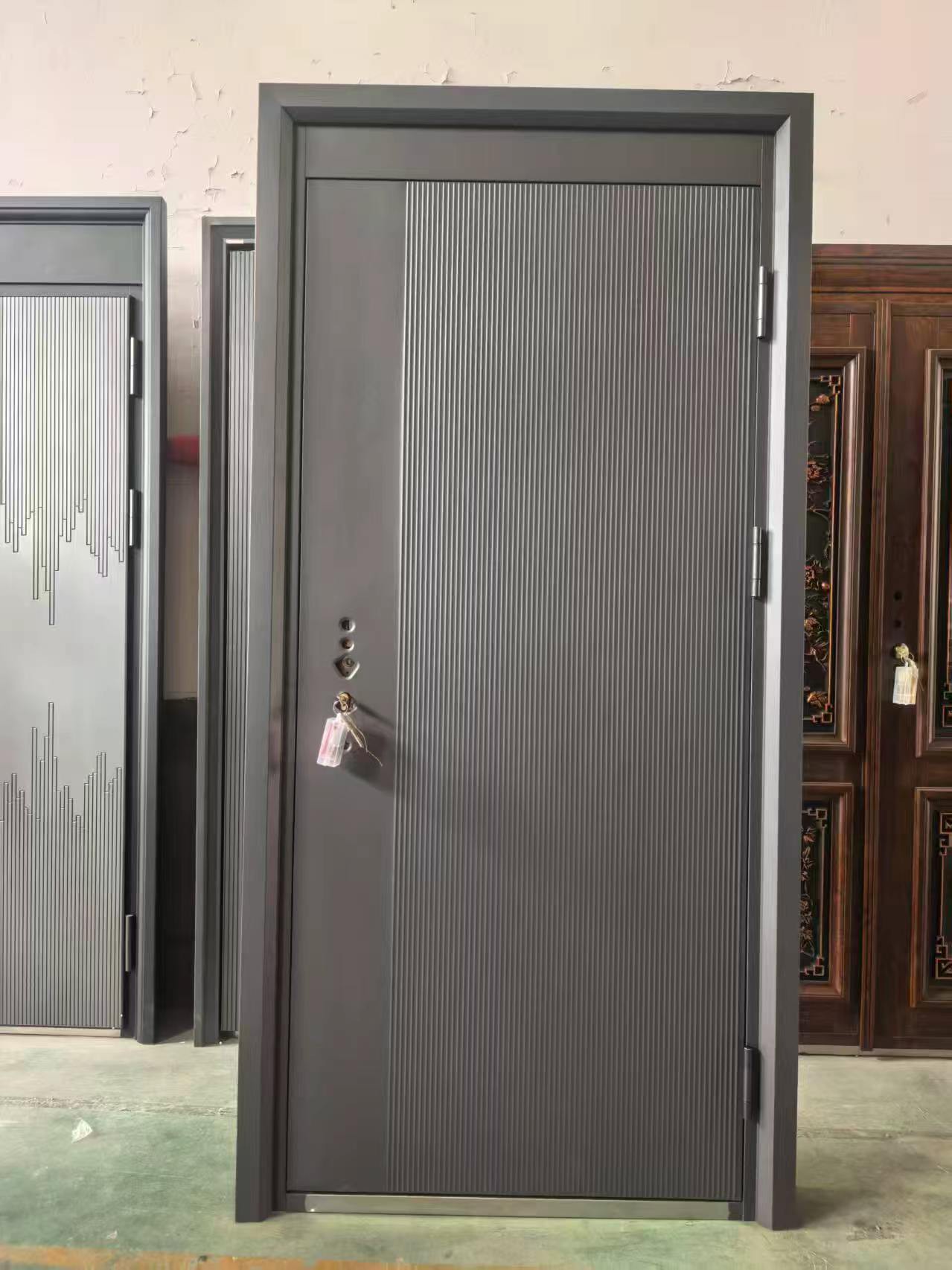


Our factory

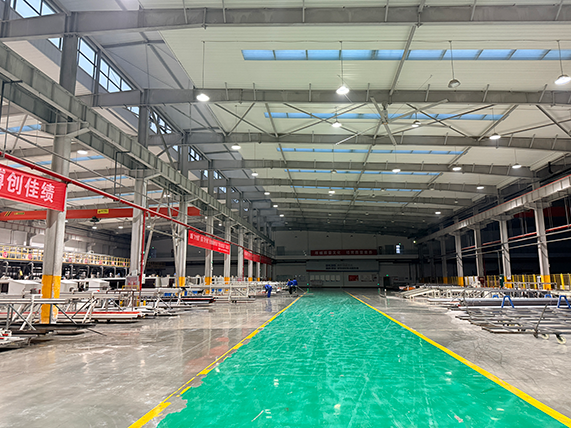


Customer visit





FAQ
Q: What's the acoustic performance of steel interior doors?
A: Standard steel doors with perimeter seals achieve STC 35–38. Higher ratings (STC 40–45) require acoustic cores, thicker glass in vision panels, and automatic drop seals at the threshold. Specify acoustic requirements explicitly-standard doors aren't acoustic doors.
Q: Can interior steel doors rust?
A: Standard interior environments don't cause steel corrosion. For humid environments (pools, industrial kitchens), specify galvanized steel or enhanced coating systems. We recommend G90 galvanizing + powder coat for these applications.
Q: What's the maximum size for steel interior doors?
A: Standard manufacturing handles single doors to 1200×2700mm. Larger sizes require heavy-duty construction with reinforced frames. Oversized doors may require floor closers or pivot hinges instead of standard butts.
Q: Are steel interior doors soundproof?
A: No door is completely soundproof. Steel doors with acoustic construction achieve meaningful speech privacy (STC 35–45). For critical acoustic isolation (recording studios, test chambers), acoustic专家 consultation is recommended.
Q: How do steel interior doors compare to aluminum interior doors?
A: Steel is stronger, more dent-resistant, and accepts hardware modifications better. Aluminum is lighter and naturally corrosion-resistant but less durable in high-impact applications. For high-traffic commercial interiors, steel is the standard.
Q: Can we match existing wood door hardware?
A: Steel doors are prepped differently than wood doors. Mortise lock preps are standard for steel; cylindrical locksets require different preparations. Specify hardware requirements early-field modifications are limited.
Q: What's the lead time for interior steel doors?
A: Standard sizes: 3–5 weeks. Custom sizes or non-standard ratings: 6–8 weeks. Acoustic or fire-rated doors require additional time for testing documentation.
Q: Do interior steel doors need fire ratings?
A: Only if local codes require them. Fire-rated interior doors are mandatory for stairwells, corridors serving hazardous areas, and certain occupancy types. Review your local building code for specific requirements.
Q: Can steel interior doors be used for exterior applications?
A: No. Interior steel doors lack the weather sealing, thermal breaks, and corrosion protection for exterior use. Specify exterior steel doors for any opening exposed to weather.
Q: What finishes are available?
A: Full RAL powder coat range. Anti-microbial coatings for healthcare. Textured finishes for industrial applications. Custom colors and specialty coatings on request.

Specification Support
Interior steel door specifications depend on the use case: acoustic requirements, fire ratings, traffic levels, and aesthetic coordination. We support design teams with technical data, STC calculations, and hardware recommendations.
Contact our export team to discuss your project.
SGL Steel Interior Doors | Technical Specification Guide | Export Division
Hot Tags: steel interior doors, China steel interior doors manufacturers, suppliers, factory, white metal door, steel cellar doors, Steel Entry Doors, Steel Garage Doors, 42 inch exterior steel door, industrial steel doors
You Might Also Like


Send Inquiry