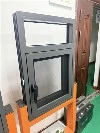
Standards define the minimum requirements for window and door products in terms of "structural strength, sealing performance, watertightness, airtightness, energy efficiency, and safety protection." Only products that meet these standards can be approved by engineering projects/construction regulatory agencies/end customers.
For purchasers, referring to standards can:
1. Clarify technical requirements and avoid "cutting corners" and "misrepresenting parameters."
2. Ensure that products can be successfully accepted in different countries/regions.
3. Reduce the risk of rework and maintenance on construction sites and improve project delivery reliability.
Below are 8 standards that are "strongly recommended" to understand and require suppliers to provide testing and certification reports when purchasing aluminum alloy windows and doors.
1. GB/T 8478-2020 (Chinese Standard) - Aluminium Windows and Doors
This is the national standard implemented in China since 2021, applicable to aluminum alloy windows and doors, replacing the old standard. It specifies the classification of windows and doors, performance requirements, test methods, inspection rules, product marking, packaging and transportation, etc.
This standard includes requirements for wind pressure resistance, watertightness, airtightness, thermal insulation, and material thickness and treatment.
If you need to purchase windows and doors from China, if the seller claims to "comply with national standards," the minimum requirement is that it must comply with GB/T 8478-2020.


EN 14351-1 is a commonly used window and door performance standard in the EU or Europe, also known as CE certification. This covers aspects such as door and window safety, structural integrity, airtightness, watertightness, wind pressure resistance, and durability. Many European countries require aluminum alloy doors and windows to meet this standard for bidding projects and building acceptance.
This standard is crucial for European suppliers and buyers. If doors and windows pass the EN14351-1 test and obtain the CE mark, it means they have obtained the entry ticket to the European market.
In North American markets such as the United States and Canada, doors and windows are often required to meet the AAMA/WDMA/CSA 101/I.S.2/A440 standard. According to this standard, doors and windows need to undergo design pressure testing, watertightness testing, airtightness testing, and structural safety testing; regulations in North America (such as the International Building Code, IBC) require exterior windows to comply with this standard.
This is essential for suppliers/buyers exporting to North America and serving North American contractors/clients.


With the promotion of energy-efficient housing and green buildings, many countries and regions have clear requirements for the "thermal performance" of doors and windows. Taking the Chinese standard as an example, GB/T 8478-2020 newly added the definition of "heat-insulating/thermal insulation/heat preservation and insulation" doors and windows.
For projects requiring energy efficiency certification (such as in the EU, Canada, the United States, and many places in Western Europe), buyers should require suppliers to provide thermal performance test reports as documentation.
The sealing, watertightness, and wind pressure resistance performance of doors and windows are important indicators of quality. GB/T 8478-2020 clearly defines the testing standards for airtightness, watertightness, and wind pressure. For high-rise buildings, coastal areas, and areas with frequent wind and rain, these performances directly determine whether the doors and windows are usable and whether they can pass project acceptance.


High-quality aluminum alloy doors and windows should not only pass initial testing but also long-term durability testing. Chinese standard GB/T 8478-2020 includes requirements for repeated opening and closing durability. For public works, high-end residential buildings, and commercial buildings, the long-term stable performance of doors and windows is extremely important. Buyers should prioritize products that have passed durability tests and have relevant certifications.
For aluminum alloy doors and windows, the profile wall thickness, grade, anodized film thickness/powder coating thickness/corrosion resistance directly affect the product's lifespan and appearance quality. GB/T 8478-2020 has clear rules on these aspects. When doors and windows are exported to areas with harsh climates (high humidity, high salinity, coastal areas) or high-standard markets (Europe, America, the Middle East), surface treatment quality is particularly crucial. Buyers should request material/coating/aluminum testing reports.


For public buildings, commercial buildings, hotels, schools, and other projects, doors and windows may need to incorporate special functions such as fire protection, smoke prevention, anti-theft, and sound insulation. Although standards vary by region, buyers should clearly require suppliers to provide relevant certifications/test reports (fire integrity/sound insulation tests/safety glass certification, etc.).
How to Apply These Standards in the Procurement Process
As a purchaser/contractor/builder/decoration company:
1. Clearly specify the standard requirements in the bidding/procurement contract: for example, "Must comply with EN 14351-1 + CE / or AAMA/WDMA/CSA 101/I.S.2/A440 / NAFS," or "For projects in China, it must comply with GB/T 8478-2020."
2. Require suppliers to provide complete certification reports, including wind pressure, water tightness, air tightness, thermal performance, profile materials, surface treatment, and durability testing.
3. Check packaging/transportation/installation specifications to ensure that doors and windows are not damaged during transportation from the factory to the construction site, and that their performance will not be compromised after installation due to transportation damage.
4. Conduct pre-acceptance testing for key projects (high-rise buildings, public buildings, export projects): random sampling can be done on-site or at the factory, or suppliers can be required to cooperate with a third-party testing agency for retesting.
5. Establish a standard checklist archive: create a document library of standards/testing/certification for each project, for project acceptance, future maintenance, and customer delivery review.

Summary
"Procuring aluminum alloy doors and windows" – if you only focus on "color/style/price/delivery time," it's easy to encounter problems in quality, safety, acceptance, and later use and maintenance. To ensure the smooth progress of the project and the quality of the building, understanding and strictly adhering to international/regional standards is essential.
The eight standards listed in this article cover the entire process from "materials, structure, performance, durability, transportation, and installation." It is recommended that every purchaser, contractor, builder, or decoration company use this as a mandatory checklist for procurement.
SGL believes that in the future, in green buildings, high-rise buildings, overseas exports, public works, and high-end residential projects, aluminum alloy doors and windows that meet the standards will increasingly become a necessity for projects, and a preferred choice with strong competitiveness and low risk.