Quick Answer
Europe's 2026 heatwave is not only a weather story. It is also a building-specification story. For contractors, developers, hotel owners, school operators and distributors, the current heatwave shows why window and door schedules should be reviewed for summer comfort, solar heat gain, ventilation, airtightness and year-round energy performance.
For aluminum window and door buyers, the practical question is not "Which window blocks heat?" It is: Which complete system balances solar control, insulation, ventilation, safety glass, frame performance, hardware, installation and local code requirements for the project location?
CTA: Project buyers can send a window and door schedule to SGL for review of frame type, glass build-up, opening style, hardware and quotation requirements.

Why This Heatwave Matters to Building Buyers
The World Meteorological Organization reported on June 29, 2026 that extreme heat had gripped large parts of Europe, with multiple records falling and serious impacts on health, infrastructure, agriculture and labour productivity. The same update noted that Europe is the fastest-warming continent, which makes heat preparedness a recurring planning issue rather than a one-off event.

For the construction sector, this matters because many European buildings were designed around heating-dominated assumptions. A facade that performs acceptably in winter may still allow excessive solar heat gain in summer. Older apartments, schools, hospitals, hotels and commercial buildings can also face practical limits: limited air-conditioning, high retrofit cost, heritage constraints, tenant disruption and uneven access to cooling.
This is where windows and doors become part of the climate-resilience discussion. They are not the only solution, and they cannot replace good architectural design. But they sit directly on the building envelope, so their glass, frame, seals, opening method and shading coordination affect indoor comfort.
What Changes in the Specification Conversation?
For many years, energy-efficient window discussions focused heavily on U-value and winter heat loss. That still matters. In a hotter European summer, buyers also need to pay closer attention to SHGC, solar-control glass, ventilation strategy and whether the window can help manage cooling load.
Key specification items include:
| Specification item | Why it matters during heatwaves | What buyers should ask |
|---|---|---|
| SHGC or solar factor | Indicates how much solar heat enters through the glass. | Is the glass package suitable for the building orientation and climate? |
| Solar-control Low-E glass | Can reduce unwanted solar heat while keeping useful daylight. | Is the coating designed for solar control, insulation, or both? |
| Thermal break aluminum frame | Reduces frame-side heat transfer compared with standard aluminum. | Is the quoted value glass-only or whole-window/system based? |
| Airtightness and seals | Poor sealing can increase unwanted heat flow and reduce HVAC efficiency. | What air leakage performance can be documented? |
| Opening style | Operable windows can support purge ventilation when outdoor conditions allow. | Which openings are safe, practical and code-compliant for the building? |
| External shading coordination | Shading can reduce direct solar gain before it hits the glass. | Can the window system work with shutters, louvers, overhangs or facade shading? |

What This Means for Aluminum Windows and Doors
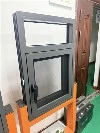
Aluminum remains attractive for projects that need strength, slim sightlines, custom sizes, commercial durability and repeatable production. The concern is that standard aluminum conducts heat. For energy-focused projects, buyers usually need to review thermal break profiles, glass build-up, spacer, gasket, drainage and installation details together.
For hot-summer and mixed-climate buildings, a useful buyer brief should include:
- Project country and city.
- Building type, such as apartment, hotel, school, clinic, office or retail.
- Facade orientation and whether openings receive strong afternoon sun.
- Glass requirement, such as double glazing, Low-E, solar-control Low-E, laminated or acoustic glass.
- Frame requirement, such as standard aluminum or thermal break aluminum.
- Opening type, such as casement, sliding, tilt-turn, fixed, top-hung or door system.
- Target values, including U-value, SHGC/solar factor, air leakage, water tightness and wind load where available.
- Local code, certificate or documentation requirements.
SGL should confirm exact product configuration, test reports, certification documents and performance data case by case before any European project claim is published.
Related SGL Pages
- SGL aluminum window systems
- Thermal break aluminum window options
- Commercial aluminum window systems
- Window U-value and SHGC guide
- Contact SGL
FAQ for Contractors and Distributors
Are heatwaves changing window specifications in Europe?
Yes. Heatwaves are pushing buyers to review summer comfort and cooling load, not only winter insulation. That means solar-control glass, SHGC, ventilation, airtightness and shading coordination should be discussed alongside U-value.
Are thermal break aluminum windows suitable for hot weather?
They can be suitable when the complete system is specified correctly. Thermal break profiles reduce frame-side heat transfer, while glass selection, seals, hardware and installation also affect final comfort.
Is Low-E glass enough for European heatwaves?
Not always. Buyers should ask whether the Low-E coating is intended mainly for insulation, solar control, or both. In sunny facades, SHGC or solar factor may be as important as U-value.
Can SGL provide European test documents?
Document availability is requires validation. Buyers should ask SGL to confirm applicable test reports, certificate scope, declared performance values and destination-market requirements for the exact configuration.