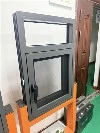
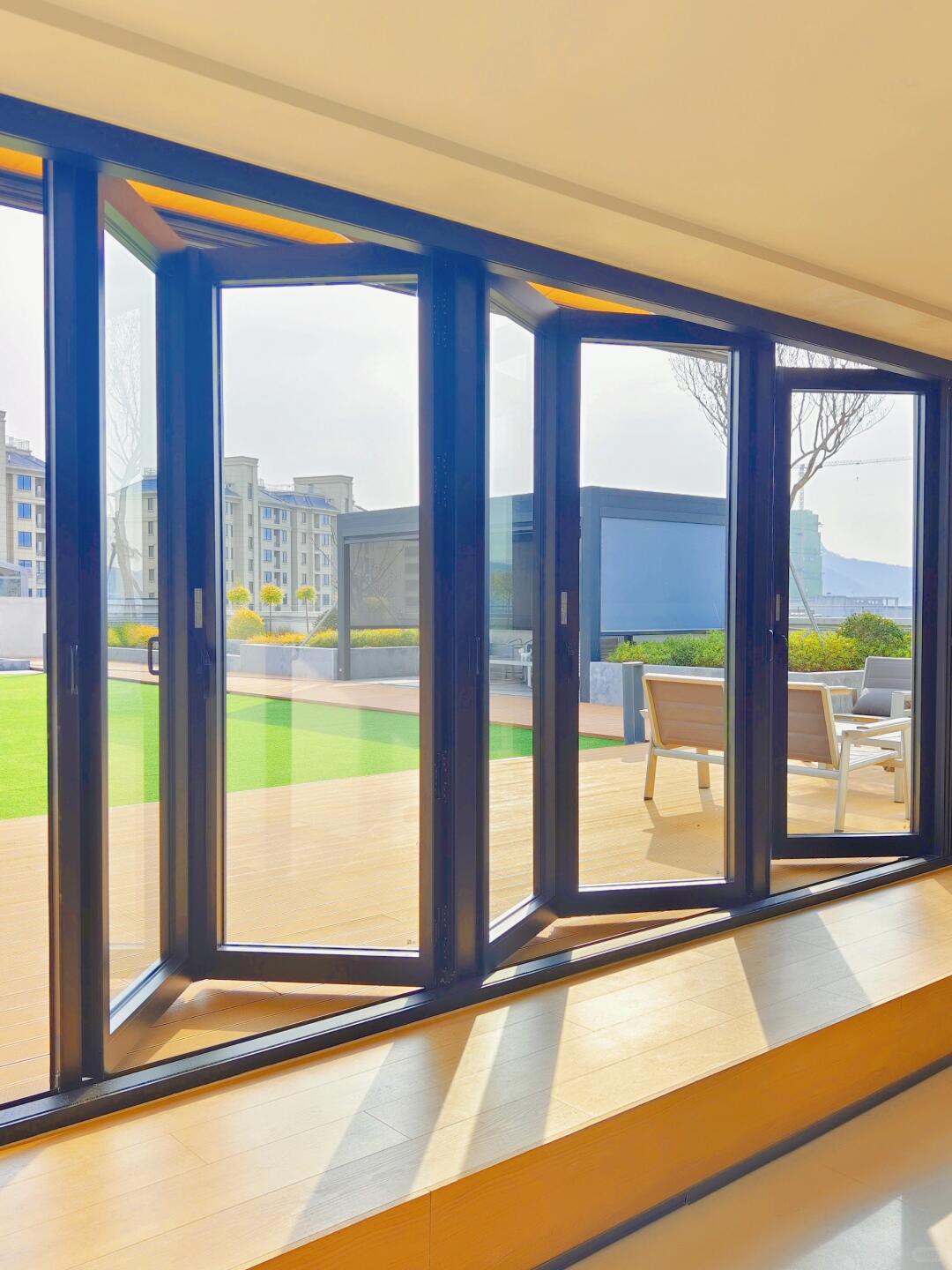
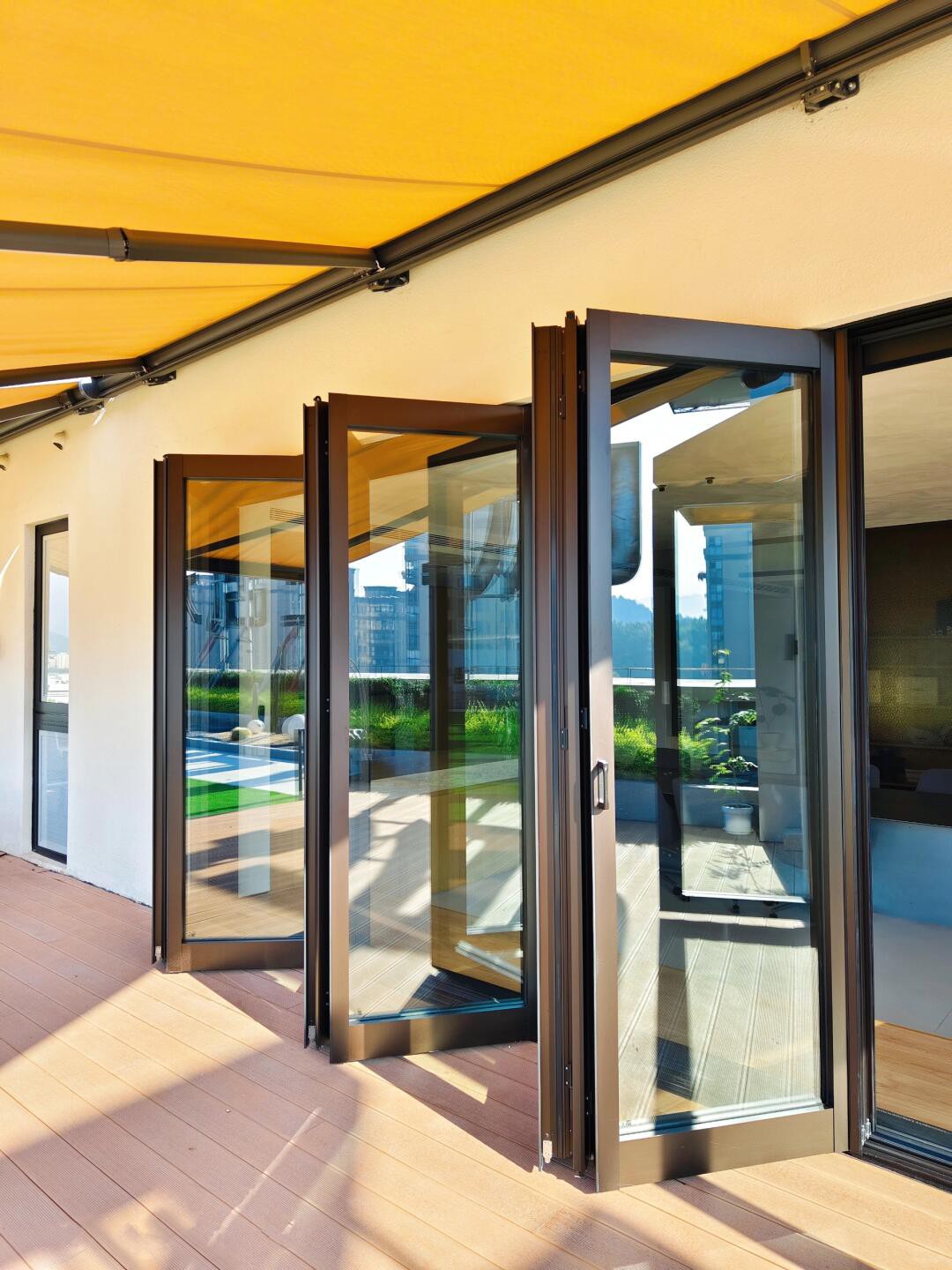
When architects and developers specify openings that blur the boundary between interior and exterior space, heavy-duty aluminum bi-fold doors consistently rank as the system of choice. Unlike standard patio sliders or French door pairs, aluminum bi-fold systems stack panels neatly to one or both sides, delivering up to 90% clear aperture and uninterrupted sightlines across spans exceeding 6 meters.
SGL manufactures thermally broken aluminum bi-fold door systems rated for both high-end residential extensions and heavy-traffic commercial entrances. This guide covers the specifications, configurations, and performance data specifiers need to select the right system for 2026 projects.


Get Project Pricing: Request a bi-fold door specification sheet with drawing details, U-value data, and hardware schedules for your project timeline.
What Makes a Bi-Fold Door "Heavy-Duty"?
Not all aluminum bi-fold systems are engineered for the same load case. A heavy-duty aluminum bi-fold door is distinguished by four core attributes:
| Attribute | Standard System | Heavy-Duty System |
|---|---|---|
| Max panel height | 2,400 mm | 3,000 mm+ |
| Max panel width | 900 mm | 1,200 mm |
| Max overall span | 4.5 m | 10 m+ |
| Traffic rating | Residential | Commercial (high-cycle) |
| Frame depth | 60 mm | 70–120 mm |
| Thermal break | Single cavity | Polyamide PA66 multi-chamber |
Heavy-duty systems use extruded 6063-T6 aluminum profiles with wall thicknesses of 2.0–2.5 mm (vs. 1.4–1.6 mm on economy systems). The thermal break is typically a glass-reinforced polyamide strip rated for structural shear, not simply a thermal insulator.
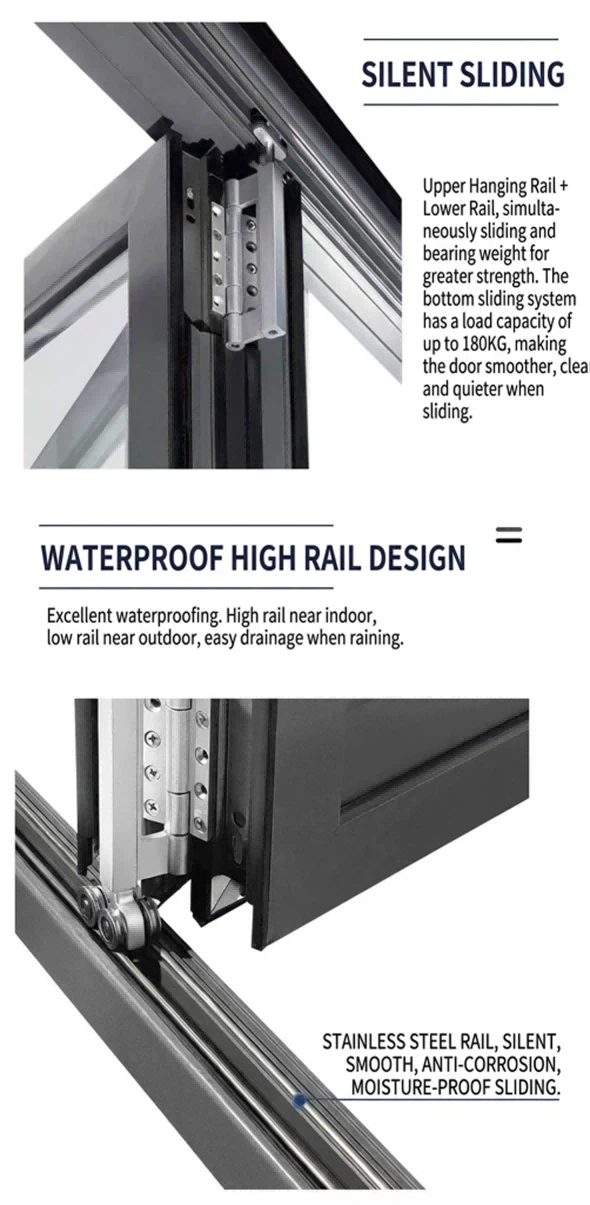
SGL's HD-Bifold Series uses a 120 mm frame depth with a triple-track bottom rail capable of supporting panels up to 150 kg each. This makes the system suitable for triple-glazed units up to 48 mm overall thickness-critical for cold-climate residential and acoustic-sensitive commercial applications.
Commercial vs. Residential: Specification Split
Commercial Applications
- Hospitality: Restaurants, hotel function rooms, and rooftop bars requiring frequent daily operation
- Retail: Flagship storefronts where the entire facade opens to pedestrian zones
- Education: University atriums and assembly halls connecting indoor and outdoor learning spaces
- Healthcare: Rehab centers and senior living facilities prioritizing natural ventilation and wheelchair access
Commercial specifiers typically prioritize:
- Cycle rating: Hardware tested to 100,000+ open/close cycles (EN 1527 Grade 4)
- Accessibility: Low-threshold options (≤15 mm) compliant with ADA / BS 8300
- Integrated automation: Motorized drive systems with wind and rain sensors
Residential Applications
- New-build extensions: Open-plan kitchen/diner-to-garden connections
- Renovation projects: Replacement of 1970s sliding patio doors in period properties
- Coastal and elevated homes: High wind-load zones requiring enhanced structural performance
Residential buyers typically prioritize:
- Thermal performance: U-values ≤ 1.4 W/m²K to meet current building regulations
- Security: Multipoint locking with PAS 24 / Secured by Design options
- Aesthetic flexibility: Slim sightlines (132 mm interlock) and RAL color matching
Core Technical Specifications

Profile & Construction
| Parameter | SGL HD-Bifold 120 Specification |
|---|---|
| Frame material | 6063-T6 aluminum, 2.2 mm wall |
| Thermal break | 34 mm PA66 GF25 polyamide |
| Frame depth | 120 mm (outer frame) |
| Sash depth | 75 mm |
| Max sash size | 1,200 mm (W) × 3,000 mm (H) |
| Max panel weight | 150 kg |
| Max configuration | 7 panels / 10 m span |
| Glazing rebate | 28–52 mm |
Glazing Options
| Glazing Type | Thickness | U-Value (W/m²K) | Application |
|---|---|---|---|
| Double glazed | 28 mm | 1.6 | Standard residential |
| Triple glazed | 40 mm | 1.2 | Passivhaus / cold climate |
| Acoustic laminated | 44 mm | 1.8 | Urban / roadside |
| Solar control | 36 mm | 1.5 | South-facing commercial |
| Fire-rated | 30–45 mm | 2.0 | EI30 boundary applications |
Thermal Performance
SGL HD-Bifold 120 achieves whole-system U-values from 1.2 W/m²K (triple glazed) to 1.8 W/m²K (double glazed with warm-edge spacer). The system is certified for Passive House component criteria when paired with certified glazing and installation detailing.
Air permeability: Class 4 (EN 1026) Wind resistance: Class C5 (EN 12211) Water tightness: Class 9A (EN 1027)


Configuration & Opening Options
Bi-fold doors are described by panel count + opening direction + traffic door preference. Common layouts include:
Panel Counts
- 2-panel: 1,200–2,400 mm opening; ideal for compact extensions
- 3-panel: 1,800–3,600 mm; most popular residential size
- 4-panel: 2,400–4,800 mm; symmetric split or offset stack
- 5–7 panel: 4,000–10,000 mm; commercial and architectural projects

Opening Directions
| Type | Description | Best For |
|---|---|---|
| All left / all right | Panels stack entirely to one side | Limited wall space on one side |
| Split center | Panels split and stack to both sides | Wide apertures with balanced views |
| Traffic door + fold | One panel operates as a standard swing door | Daily pedestrian access without full opening |
Threshold Options
| Threshold | Height | Use Case |
|---|---|---|
| Standard rebated | 50 mm | Standard residential, weather priority |
| Low-profile | 20 mm | Accessibility, indoor/outdoor level match |
| Flush / zero | 0–12 mm | Full wheelchair access, modern minimal aesthetic |
Note: Flush thresholds require slot drainage and careful falls in the external paving to maintain water tightness. SGL provides threshold detail drawings for each specification.
Hardware & Security
Locking Systems
Heavy-duty aluminum bi-fold doors require multipoint locking that engages at multiple points along the interlock and top/bottom rails. SGL systems include:
- Standard: 8-point mushroom cam locking (EN 1303)
- Enhanced: 12-point hook bolt system with deadbolts
- PAS 24: Certified configuration for UK building regulations
- Concealed hinges: For slim sightline aesthetics without exposed hardware
Handle & Operation
- Lever/lever: Standard manual operation
- Lift-and-slide: For oversized panels requiring reduced operating force
- Motorized: Somfy or equivalent automation with remote and sensor integration
Cycle Testing
All SGL heavy-duty hardware is tested to EN 1527 Grade 4 (100,000 cycles). For commercial entrances with projected daily usage exceeding 50 cycles, Grade 4 is non-negotiable.
Finishes & Colors
SGL aluminum bi-fold doors are finished with Qualicoat-certified polyester powder coating (PPG / Interpon or equivalent):
| Finish Type | Warranty | Notes |
|---|---|---|
| Standard polyester | 10 years | 200+ RAL colors |
| Metallic | 10 years | Fine texture, premium aesthetic |
| Anodized | 15 years | Natural metal look, coastal grade available |
| Wood effect | 10 years | Sublemmation transfer; oak, walnut, mahogany |
| Marine grade | 20 years | For coastal / C5-M environments |
Popular 2026 colors: Anthracite Grey RAL 7016, Jet Black RAL 9005, Traffic White RAL 9016, Basalt Grey RAL 7012, and dual-color options (dark externally, white internally).
Sizing Guide: How to Specify
Step 1: Determine Clear Opening
Measure the structural opening width and height. Deduct:
- 10–15 mm per side for frame clearance and packing
- 20–30 mm for head and sill adjustment
Example: A 3,500 mm × 2,400 mm structural opening accepts a 3,460 mm × 2,360 mm bi-fold frame.
Step 2: Select Panel Count
Divide clear width by desired panel width. For residential projects, 800–1,000 mm per panel is ergonomically ideal. Panels wider than 1,200 mm increase operating force and hardware load.
Step 3: Check Structural Load
For spans over 6 meters or panel heights over 2,700 mm, a structural engineer must verify:
- Wind load on the building facade (q-value per EN 1991-1-4)
- Lintel or steel beam capacity above the opening
- Foundation bearing for the bottom track (especially for recessed thresholds)
Step 4: Integration with Building Envelope
Bi-fold doors must be installed with continuous insulation and airtight taping to avoid thermal bridging. SGL provides installation detail drawings showing:
- Sill-to-floor junction with thermal break continuity
- Head-to-lintel sealing with expansion allowance
- Jamb-to-wall insulation overlap
Installation & Lead Times
Installation Timeline
| Phase | Duration | Notes |
|---|---|---|
| Specification & quotation | 3–5 days | CAD details, glass schedule |
| Manufacturing | 4–6 weeks | Custom sizes and finishes |
| Delivery | 1–2 weeks | Sea or air freight per destination |
| Installation | 2–5 days | Per 3–5 panel set; weather dependent |
SGL delivers heavy-duty aluminum bi-fold door systems to project sites in Europe, North America, Australia, and Central Asia with pre-assembled hardware and labeled panels to reduce on-site installation time.
Maintenance Requirements
Heavy-duty aluminum bi-fold doors are low-maintenance compared to timber systems, but periodic care extends hardware life:
- Monthly: Check track for debris; wipe seals with silicone spray
- Quarterly: Lubricate hinges and rollers with light machine oil
- Annually: Inspect locking points for alignment; clean drainage slots
- Every 5 years: Replace perimeter compression seals if hardened or cracked
Coastal installations in C4/C5 environments should have frames rinsed with fresh water quarterly to prevent salt buildup on anodized or powder-coated surfaces.
Pricing Overview (2026)
| Configuration | Size (mm) | Glazing | Approx. Supply Only | Supply + Install |
|---|---|---|---|---|
| 3-panel, standard threshold | 3,000 × 2,200 | Double | £2,800–£3,500 | £4,200–£5,200 |
| 4-panel, low threshold | 4,000 × 2,400 | Triple | £4,500–£5,800 | £6,500–£8,200 |
| 5-panel, flush threshold | 5,500 × 2,700 | Triple + solar | £7,200–£9,500 | £10,500–£13,500 |
| 6-panel, commercial automation | 7,000 × 3,000 | Acoustic | £12,000–£16,000 | £17,000–£22,000 |
Pricing is indicative for UK/EU markets. Contact SGL for project-specific quotations including shipping, duty, and local installation support.
Why Specify SGL Heavy-Duty Aluminum Bi-Fold Doors
- 19 years of manufacturing experience across aluminum, PVC, timber, and steel systems
- 120 mm thermally broken profile achieving U-values as low as 1.2 W/m²K
- Panel sizes up to 1,200 × 3,000 mm and spans to 10 meters
- Certified hardware to EN 1527 Grade 4 (100,000 cycles)
- Custom RAL and anodized finishes with marine-grade options
- Project support including CAD details, structural calculations, and installation training
SGL has supplied heavy-duty aluminum bi-fold systems to hospitality projects in Kazakhstan, residential developments in Poland, and commercial fit-outs across the Middle East. View case studies or request a specification.
Our Product Applications


FAQ
Q: What Is The Maximum Width For A Heavy-Duty Aluminum Bi-Fold Door?
A: Heavy-duty systems can span up to 10 meters with 6–7 panels. Each panel is typically limited to 1,200 mm width and 150 kg weight. For spans beyond 10 meters, multiple bi-fold sets with intermediate posts or structural steel frames are recommended.
Q: Are Aluminum Bi-Fold Doors Thermally Efficient?
A: Yes. Modern thermally broken aluminum bi-fold doors with triple glazing achieve whole-system U-values as low as 1.2 W/m²K, comparable to high-end PVC systems. The key is the polyamide thermal break (minimum 24 mm, ideally 34 mm+) and warm-edge spacer bars.
Q: Can Bi-Fold Doors Be Used In Commercial Buildings?
A: Absolutely. Heavy-duty aluminum bi-fold doors are rated for commercial use when specified with Grade 4 hardware (100,000 cycles), reinforced frames, and automation where required. They are common in hospitality, retail, and education sectors.
Q: What Is The Smallest Opening That Can Take A Bi-Fold Door?
A: A 2-panel bi-fold door can suit openings as narrow as 1,200 mm. However, the practical minimum is often 1,400–1,600 mm to allow meaningful clear opening when folded. For smaller apertures, a French door or sliding system is usually more appropriate.
Q: How Secure Are Aluminum Bi-Fold Doors?
A: When fitted with multipoint locking (8-point minimum), hook bolts, and laminated security glass, aluminum bi-fold doors meet PAS 24 and Secured by Design standards. The weakest point is typically the handle cylinder-specify TS007 3-star rated cylinders.
Q: Do Bi-Fold Doors Need A Structural Engineer?
A: For spans over 6 meters, panel heights over 2,700 mm, or installations in high wind-load zones (coastal, elevated), a structural engineer should verify lintel capacity and wind loading per EN 1991-1-4. SGL can provide structural load data for engineer review.
Q: What Is The Difference Between A Standard And Low Threshold?
A: A standard threshold is 50 mm high with a weather-rated rebate. A low threshold is 20 mm and suits accessibility requirements. A flush threshold is 0–12 mm but requires careful external drainage design to prevent water ingress.
Q: Can Bi-Fold Doors Be Automated?
A: Yes. Motorized drive systems (Somfy, GEZE, or equivalent) can be integrated into heavy-duty aluminum bi-fold doors. Automation is standard for commercial projects and increasingly specified for large residential openings. Wind and rain sensors can trigger automatic closure.
Q: How Long Do Aluminum Bi-Fold Doors Last?
A: The aluminum frame itself has a service life exceeding 40 years. Hardware typically lasts 20–30 years depending on cycle frequency. Powder-coated finishes carry 10–20 year warranties, and anodized finishes up to 25 years in normal environments.
Q: What Glazing Should I Choose For A South-Facing Commercial Facade?
A: For south-facing commercial applications, specify solar control glazing with a low g-value (≤ 0.35) to reduce solar gain. Combine with low-E coating and argon fill for thermal performance. Acoustic laminated glass is recommended for street-facing retail or hospitality entrances.