Executive Summary
Thermal break aluminum windows are engineered aluminum fenestration products that incorporate an insulating barrier within the frame profile, dramatically reducing heat transfer between outdoor and indoor environments. By preventing aluminum's high thermal conductivity (237 W/m·K) from acting as a direct bridge, thermal break technology enables aluminum windows to achieve U-values as low as 1.0 W/m²K - rivaling uPVC and qualifying for Passive House certification in demanding climates. This article explains how thermal break technology works, compares performance against non-thermal alternatives, identifies the right applications and climate zones, and provides practical guidance on specifying the correct system for your project.
1. How Thermal Break Technology Works
1.1 The Problem: Why Standard Aluminum Frames Lose Heat
Aluminum is an excellent conductor of heat. At a thermal conductivity rating of 237 W/m·K, it transfers thermal energy nearly as efficiently as copper - far too fast for a building envelope component that is supposed to insulate.
In a standard (non-thermal-break) aluminum window, the exterior frame and interior frame are a single continuous piece of metal:
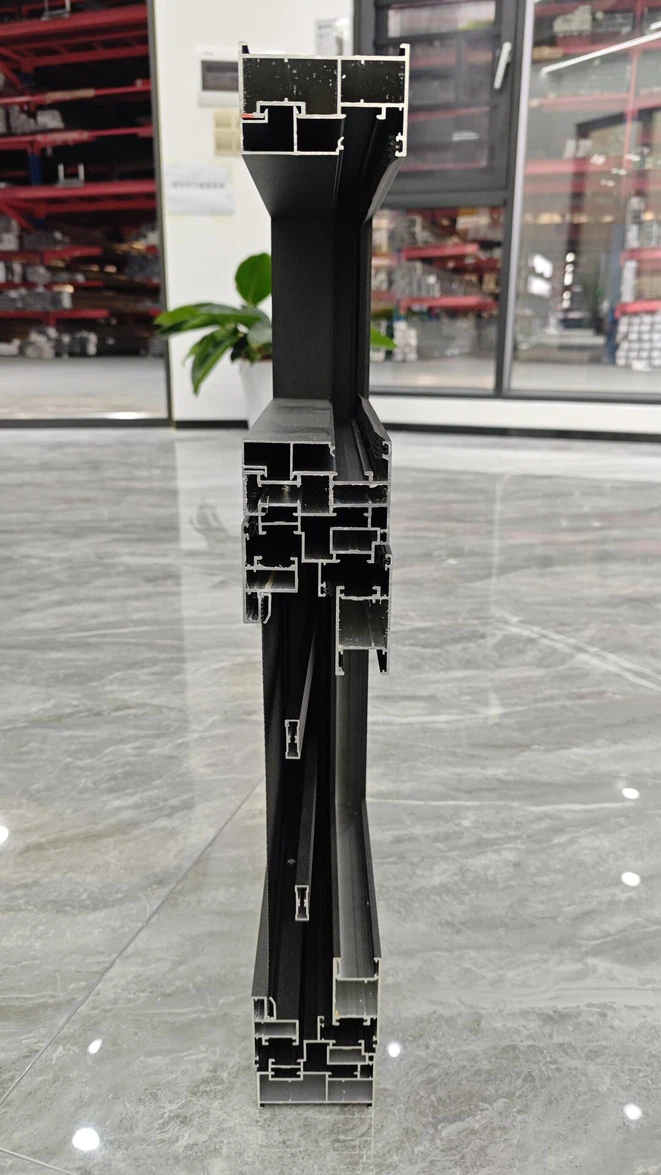
This creates two major problems:
- Elevated heating costs - heat escapes through the frame in winter; the window works against your HVAC system
- Interior surface condensation - the inner aluminum surface can drop below the dew point temperature, causing water droplets to form on the frame - a condition linked to mold growth and structural deterioration
1.2 The Solution: PA66 Thermal Break Strip
The thermal break concept is elegant: cut the aluminum's thermal conductivity without sacrificing the structural strength that makes aluminum superior in the first place.
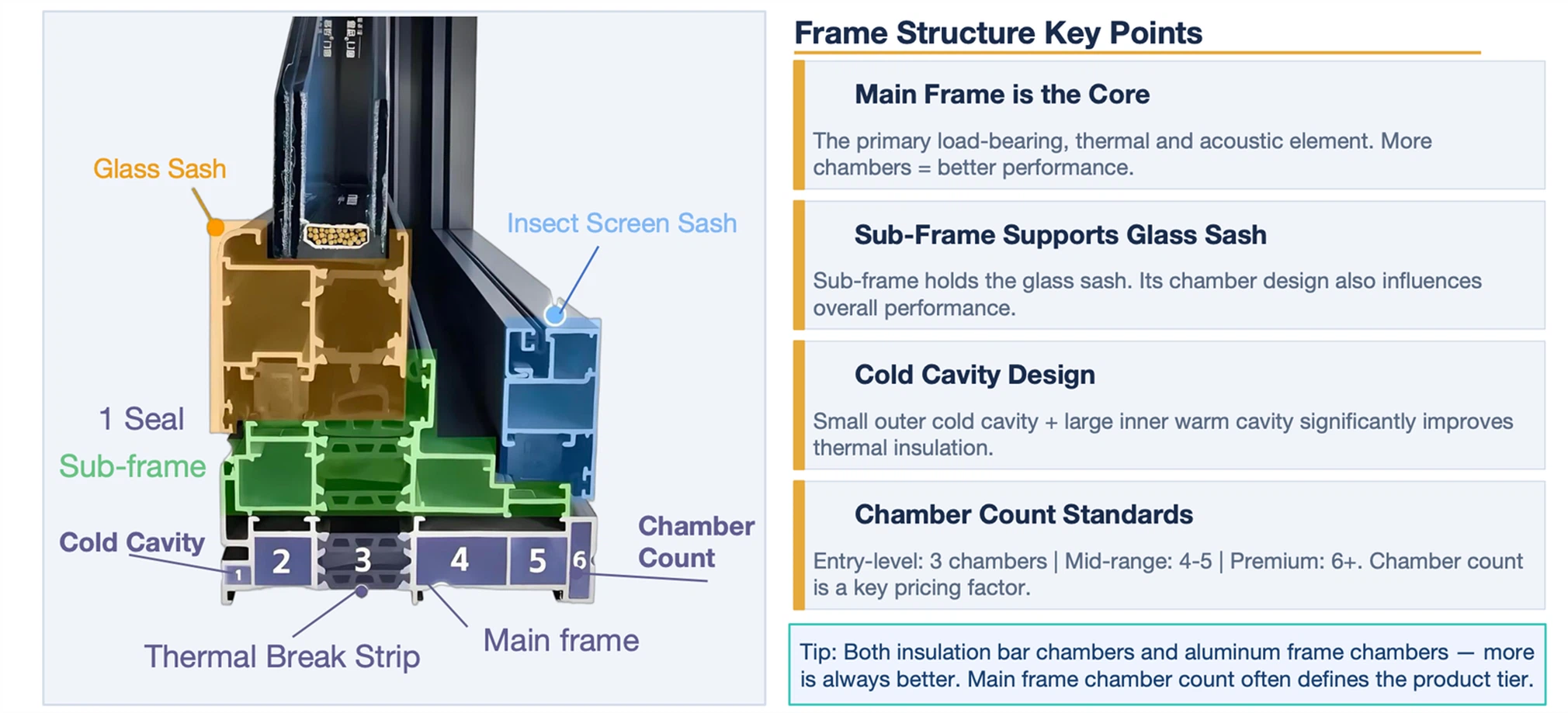
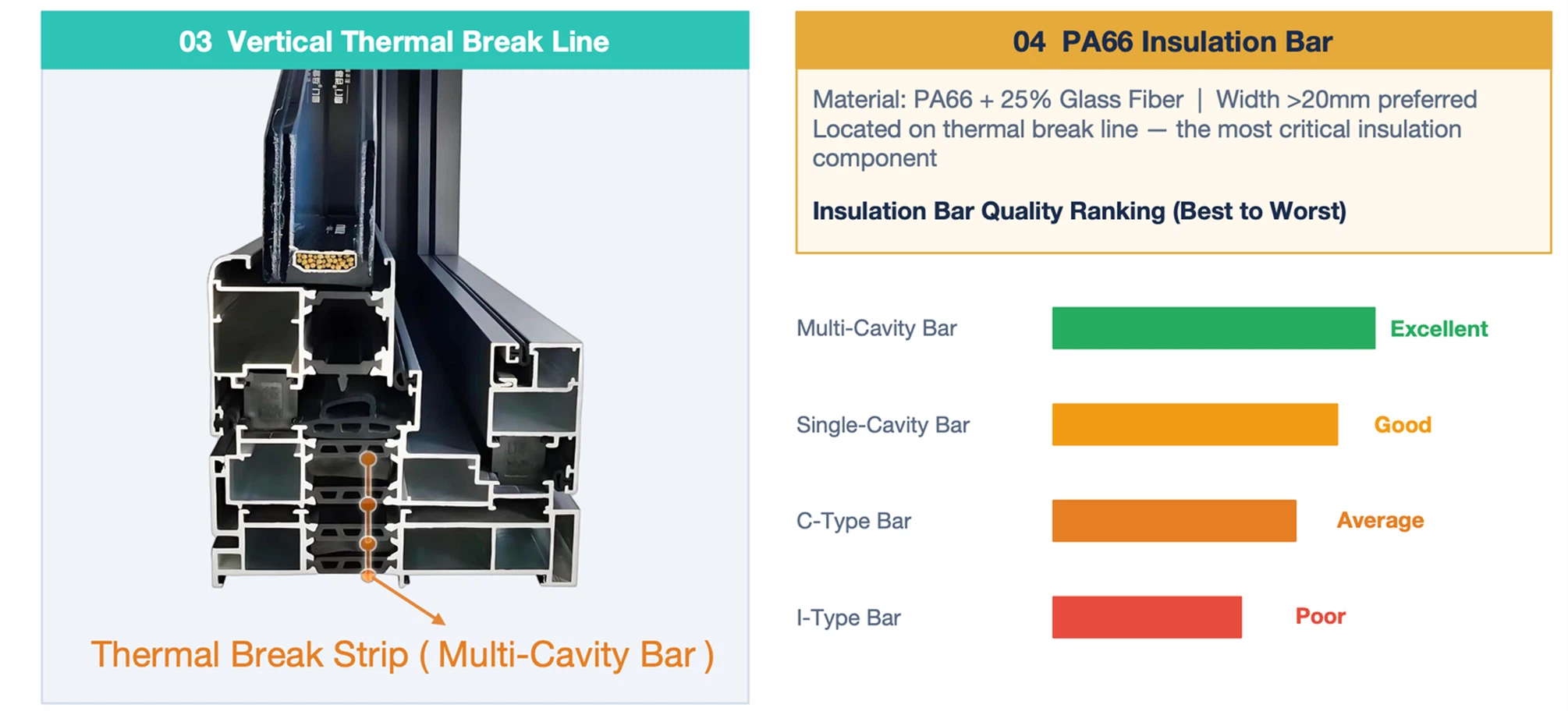
This is accomplished by inserting a polyamide 66 (PA66) strip - glass-fiber reinforced (25%) into a routed channel within the aluminum profile, separating the exterior and interior aluminum components:

The PA66 strip is mechanically connected to the aluminum profiles using a nylon-glass injection process or a polyamide strip-and-punch bonding system, ensuring the composite frame retains the structural rigidity of aluminum while creating a genuine thermal interruption.
1.3 Two Thermal Break Production Methods
| Method | Process | Strength | Insulation Performance | Cost |
|---|---|---|---|---|
| Polyamide Strip (Push-In) | Nylon-glass strip pushed into routed aluminum channel, crimped at intervals | High | Excellent (multi-chamber design) | Medium |
| Pour-and-Return (Cast-in-Place) | Liquid polyurethane poured into aluminum cavity, then chemically bonded | Very high | Superior (fully encapsulated) | Higher |
Most commercial-grade thermal break aluminum windows use the polyamide strip method, as it offers the best balance of structural performance and manufacturing cost. The pour-and-return method is reserved for ultra-high-performance or Passive House-certified systems.
2. Performance Comparison: Thermal Break vs. Non-Thermal Aluminum
2.1 U-Value Comparison
U-value (also called U-factor) measures the rate of heat transfer through a window assembly. Lower is better.
| Window Type | Frame U-Value (W/m²K) | Whole-Window U-Value* | Rating |
|---|---|---|---|
| Non-thermal aluminum (single glazed) | 5.8–8.0 | 4.5–6.5 | ❌ Poor |
| Non-thermal aluminum (double glazed) | 5.8–8.0 | 2.6–3.2 | ⚠️ Acceptable |
| Thermal break aluminum (standard, double glazed) | 1.8–3.5 | 1.4–2.0 | ✅ Good |
| Thermal break aluminum (high-performance, triple glazed) | 0.8–1.5 | 0.8–1.1 | ✅✅ Excellent |
| uPVC (standard double glazed) | 1.5–2.5 | 1.5–2.2 | ✅ Good |
| Wood frame (double glazed) | 1.0–1.8 | 1.0–1.6 | ✅✅ Excellent |
*Whole-window U-value includes frame + glass + spacer. Test method: EN ISO 10077-1 / NFRC 100.
Key Finding: A well-designed thermal break aluminum window with double glazing (U-value 1.4–2.0 W/m²K) performs on par with - or better than - most uPVC windows. Paired with triple glazing, thermal break aluminum reaches Passive House levels.
2.2 Condensation Resistance Comparison
Interior surface temperature factor (fRsi) predicts the risk of surface condensation on window frames:
| Window Type | fRsi Factor (at -10°C outdoor / +20°C indoor, 50% RH) | Condensation Risk |
|---|---|---|
| Non-thermal aluminum | 0.10–0.25 | ❌ High risk - interior frame below dew point |
| Thermal break aluminum | 0.55–0.70 | ✅ Low risk - interior surface stays above dew point |
| uPVC | 0.50–0.65 | ✅ Low risk |
| Wood frame | 0.60–0.75 | ✅ Very low risk |
A high-performance thermal break aluminum window achieves a condensation resistance factor comparable to wood - eliminating the mold and corrosion risks associated with moisture forming on interior metal surfaces.
2.3 Structural Strength Comparison
| Property | Non-Thermal Aluminum | Thermal Break Aluminum | Advantage |
|---|---|---|---|
| Max. vent width (unsupported) | 1.5m+ | 1.2m+ | Non-thermal slightly wider |
| Wind pressure resistance | Up to 5,000 Pa | Up to 4,000 Pa | Non-thermal slightly stronger |
| Frame depth range | 50–80mm | 60–100mm | Thermal break slightly deeper |
| Thermal performance | Poor | Excellent | Thermal break wins |
| Overall structural rating | ★★★★★ | ★★★★☆ | Aluminum wins overall |
Bottom line: Thermal break aluminum sacrifices approximately 10–15% of maximum unsupported span compared to non-thermal aluminum, but retains roughly 95% of the structural strength - an acceptable trade-off given the massive thermal performance improvement.
3. Where Thermal Break Aluminum Windows Excel
3.1 Climate Zones Where Thermal Break Is Essential
| Climate Zone | Requirement | Thermal Break Fit |
|---|---|---|
| Severe Cold (Northern Europe, Canada, Russia, Northern China) | U ≤ 1.5 W/m²K | ✅ Ideal - triples or high-performance doubles required |
| Cold / Mixed (Central Europe, Northeast US, Japan) | U ≤ 2.0 W/m²K | ✅ Recommended - standard thermal break meets requirement |
| Hot-Humid (Southeast Asia, Coastal India, Gulf States) | Solar heat gain control (SHGC) | ✅ Recommended - thermal break + Low-E blocks radiant heat |
| Hot-Dry (Middle East, North Africa, Desert Southwest US) | Solar control + insulation | ✅ Recommended - triple function: block heat, reflect sun, maintain structural strength |
| Temperate / Marine (UK, New Zealand, Pacific Coast) | Balanced performance | ✅ Suitable - thermal break handles condensation risk |
| Tropical (Equatorial regions) | Shading + ventilation focus | ⚠️ Evaluate - aluminum's strength advantage may outweigh thermal needs |
3.2 Building Types Best Suited for Thermal Break Aluminum
| Building Type | Why Thermal Break Aluminum Is Optimal |
|---|---|
| High-rise residential and commercial | Wind load strength + thermal performance in one system |
| Passive House / net-zero buildings | U-values below 0.8 W/m²K achievable with triple glazing |
| Luxury residential and villas | Slim sightlines + high thermal performance + premium aesthetics |
| Healthcare and education facilities | Condensation resistance (hygiene and indoor air quality) |
| Coastal buildings | Thermal break + powder coat = corrosion + condensation resistance |
| Historic building retrofits | Slim profiles replicate original appearance; high performance exceeds originals |
3.3 When Non-Thermal Aluminum Is Still Acceptable
Non-thermal (standard) aluminum windows remain a viable choice for:
- Internal partition walls and interior doors - where exterior thermal performance is irrelevant
- Climate zones with year-round mild temperatures (15–25°C average) - where condensation risk is negligible
- Non-conditioned spaces - warehouses, parking structures, covered walkways
- Projects with severe budget constraints where thermal codes do not apply
4. Key Specifications to Verify Before Specifying
When evaluating thermal break aluminum window systems, confirm the following specifications with your supplier:
4.1 Thermal Performance Certifications
| Certification / Standard | Region | Requirement |
|---|---|---|
| CE Marking (EN 14351-1) | Europe | Declared U-value, test report required |
| NFRC 100 / 200 | North America | Certified U-value and SHGC ratings |
| Passive House (PHI) | Global | Whole-window U ≤ 0.8 W/m²K for certification |
| China GB/T 29755 | China | Thermal break performance classification |
| WERS (Window Energy Rating Scheme) | Australia | Star rating 0–10 for thermal performance |
4.2 Thermal Break Component Standards
| Component | Minimum Specification | SGL Standard |
|---|---|---|
| PA66 material grade | PA66 + 25% glass fiber (minimum) | PA66 + 25% GF, Akulon or equivalent |
| Strip width | ≥ 20mm (for frames < 80mm depth) | 24–35mm depending on series |
| Strip depth in channel | Mechanically locked (minimum 2 anchor points per 300mm) | 3+ anchor points per 300mm, serrated profile |
| Multi-chamber design | 2+ chambers recommended | 3-chamber profile standard on SGL-80TB and above |
4.3 Recommended Glazing Configurations by Climate
| Climate | Recommended Glazing | Whole-Window U-Value Target |
|---|---|---|
| Severe cold (-30°C and below) | Triple glazed, 5+12+5+12+5mm, 2× Low-E, argon-filled | ≤ 0.8 W/m²K |
| Cold / Mixed | Double or triple glazed, 5+16+5mm, Low-E, argon | 1.0–1.5 W/m²K |
| Temperate / Marine | Double glazed, 4+16+4mm or 5+16+5mm, Low-E | 1.4–1.8 W/m²K |
| Hot-Humid | Double glazed, solar control Low-E, air-filled or argon | 1.6–2.2 W/m²K |
| Hot-Dry / Desert | Triple glazed, solar control Low-E, argon | 1.2–1.6 W/m²K |
5. SGL Thermal Break Aluminum Window Series
SGL offers three tiers of thermal break aluminum window systems to meet different performance and budget requirements:
| Series | Profile Depth | Thermal Break Strip Width | No. of Chambers | Whole-Window U-Value (Double Glazed) | Ideal Application |
|---|---|---|---|---|---|
| SGL-60TB | 60mm | 24mm PA66+GF | 3 | 1.8–2.2 W/m²K | Standard residential, budget-conscious projects |
| SGL-70TB | 70mm | 28mm PA66+GF | 3 | 1.4–1.8 W/m²K | Premium residential, hospitality, schools |
| SGL-80TB | 80mm | 32mm PA66+GF | 4 | 1.0–1.4 W/m²K | Commercial buildings, high-performance requirements |
| SGL-93TB | 93mm | 35mm PA66+GF (pour-and-return) | 4 | 0.8–1.1 W/m²K | Passive House, extreme climates, net-zero projects |
All SGL thermal break windows are available in the following opening types:
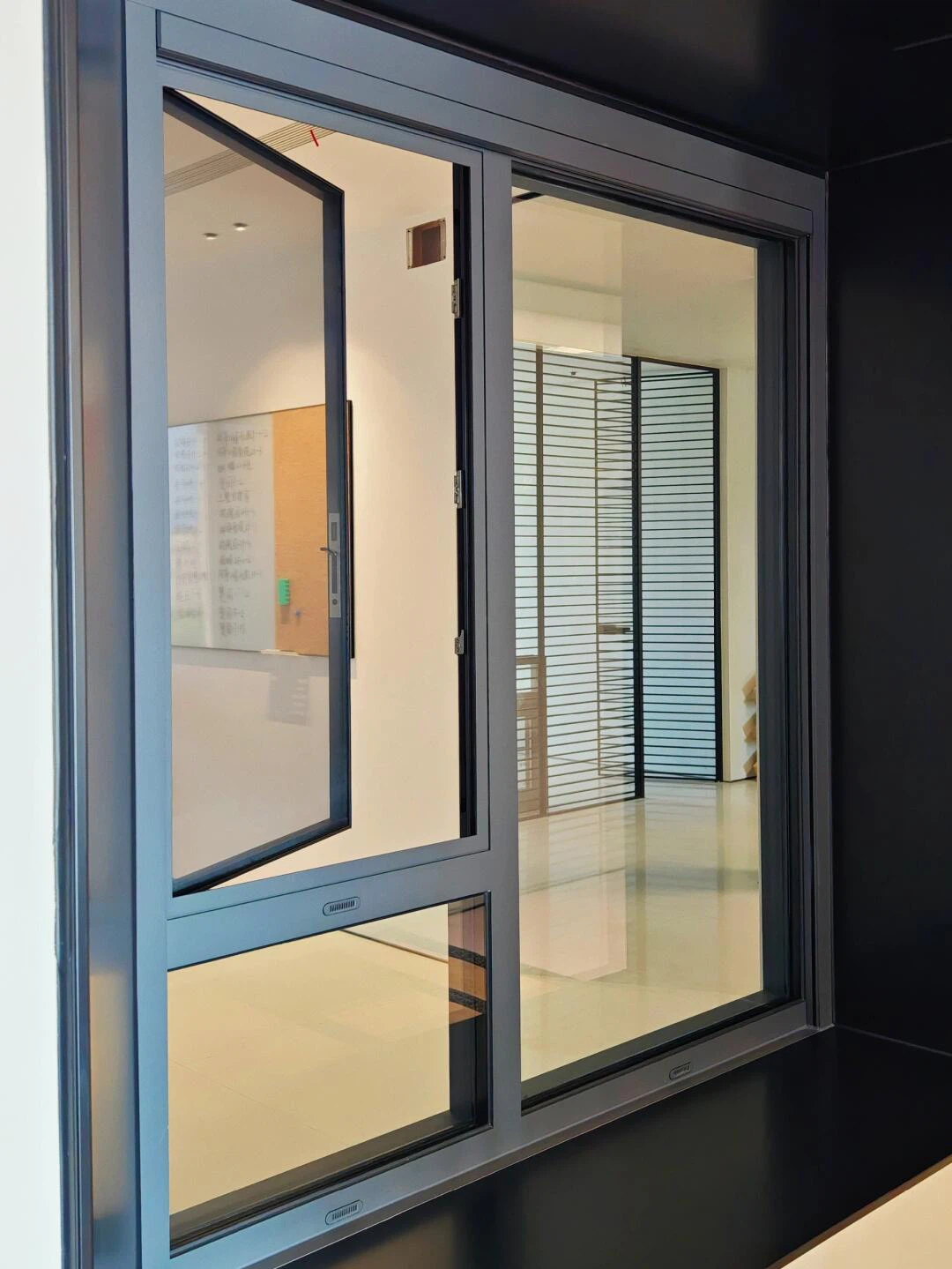
- Casement (side-hung, top-hung)
- Awning (top-hung)
- Tilt-and-Turn (dual-function)
- Fixed (non-opening, framing panels)
our Products



FAQ
Q: Q1: Does the thermal break strip weaken the window frame?
A: A: Minimally. A properly designed thermal break system retains approximately 95% of the structural strength of non-thermal aluminum. The trade-off - slightly reduced maximum unsupported spans - is negligible in most residential and commercial applications. For buildings requiring maximum spans beyond 1.2m, structural steel reinforcement can be integrated into the curtain wall system.
Q: Q2: How long does the PA66 thermal break last?
A: A: PA66+25%GF strips have a demonstrated service life exceeding 50 years under normal conditions, confirmed by accelerated aging tests (1000 hours at 80°C / 95% RH with < 5% performance degradation). The bond between PA66 and aluminum profiles is designed to outlast the building envelope.
Q: Q3: Can thermal break aluminum windows be used in Passive House projects?
A: A: Yes - with the correct configuration. SGL's SGL-90TB series with triple-glazed, argon-filled, Low-E glass units achieves whole-window U-values of 0.8–1.1 W/m²K, meeting the Passive House Institute's certification threshold. Certification requires third-party testing and documentation (PHPP modeling).
Q: Q4: Does thermal break aluminum cost significantly more than non-thermal aluminum?
A: A: Yes, approximately 25–40% more in upfront cost for the frame system. However, when compared against a full lifecycle analysis - including reduced heating/cooling bills, elimination of condensation remediation costs, and extended replacement cycles - thermal break aluminum typically achieves payback within 5–12 years in cold and mixed climates.
Q: Q5: How do I verify a supplier's thermal break claims?
A: A: Request: ① the manufacturer's test report from an accredited laboratory (e.g., IFT Rosenheim, Exova, TÜV); ② a CE Declaration of Performance (DoP) referencing EN 14351-1; ③ PHI certification or NFRC labels for U-value claims. Be cautious of claims that cannot be substantiated with third-party documentation.
Q: Q6: What maintenance is required for thermal break aluminum windows?
A: A: Standard maintenance is minimal - periodic cleaning of glass and hardware (every 6–12 months). Unlike non-thermal aluminum in coastal areas, thermal break frames do not require corrosion-specific maintenance when properly powder-coated or anodized. Inspect and lubricate hardware (hinges, locks, operators) annually.
7. Conclusion
Thermal break technology has transformed aluminum windows from a high-strength, poor-insulator into a high-strength, high-insulator - eliminating the primary objection that architects and specifiers have held against aluminum fenestration for decades.
If your project:
- Is located in a cold, mixed, or extreme climate zone
- Targets Passive House, net-zero, or green building certification
- Involves high-rise construction where structural strength and slim profiles are both critical
- Faces condensation concerns in humid or marine environments
...then thermal break aluminum windows should be your default specification, not an upgrade option.
The thermal break story is ultimately a story about having both things you need: the strength of aluminum and the insulation of a modern building envelope. For most projects, you no longer have to choose.
Get a Thermal Break Aluminum Window Specification from SGL
SGL manufactures thermal break aluminum window systems from our Foshan, China facility, with 19 years of experience supplying projects in Kazakhstan, Poland, Southeast Asia, the Middle East, and beyond.
What we provide:
- 📐 Free window system specification based on your project drawings and climate zone
- 📋 Performance test reports (IFT Rosenheim, EN standards) for every series
- 💰 EXW / FOB / CIF / DDP pricing for all delivery terms
- 📑 Engineering support for Passive House and green building certification documentation
- 🚢 Export logistics coordination to your project site
📞 Contact: info@sgl-doors-windows.com | Request a Quote
Data sourced from EN ISO 10077-1/2, NFRC 100/200, Passive House Institute (PHI), Aluminium Magazine, and SGL internal testing documentation. Specifications subject to project-specific confirmation. Updated May 2026.
© 2026 SGL Doors & Windows. All rights reserved.